


What's Happening?
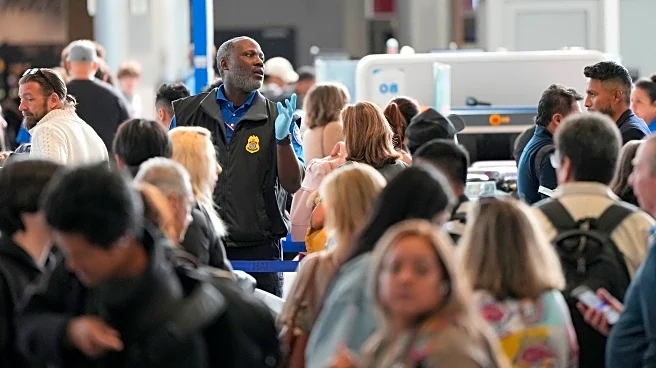
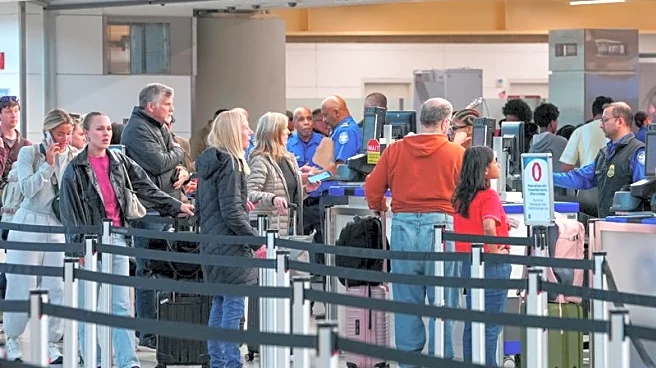
Severe staffing shortages at the Transportation Security Administration (TSA) have led to significant delays at major U.S. airports. The shortages are a result of a partial government shutdown, which has left TSA agents working without pay. This has caused
a high rate of callouts, with some days seeing about 10% of staff not reporting for duty. As a result, travelers have faced long and unpredictable security lines, with wait times exceeding two hours at some airports. Hartsfield-Jackson Atlanta International Airport and Houston’s George Bush Intercontinental Airport have been particularly affected, with wait times reaching up to 150 minutes. Other airports like JFK and Salt Lake City have experienced moderate delays, while some, like Los Angeles, have reported minimal disruptions.
Why It's Important?
The TSA staffing shortages and resulting delays highlight the broader impact of the government shutdown on public services. With TSA agents working without pay, the situation underscores the strain on federal employees and the potential risks to airport security and efficiency. The delays are particularly concerning as they coincide with peak spring break travel, affecting millions of travelers. The unpredictability of wait times complicates travel plans and could lead to missed flights and increased frustration among passengers. The situation also raises questions about the sustainability of current operations if the shutdown continues, potentially leading to more severe disruptions.
What's Next?
Attention is now focused on Washington, where lawmakers are under pressure to resolve the funding lapse. With another missed paycheck for TSA employees looming, the situation could worsen if a resolution is not reached soon. The ongoing disruptions may prompt further calls for government intervention to ensure the continuity of essential services. Airports are advising travelers to arrive earlier than usual and are providing live updates on wait times to help passengers plan their journeys. The situation remains fluid, and the potential for increased delays continues as the shutdown persists.