








What's Happening?
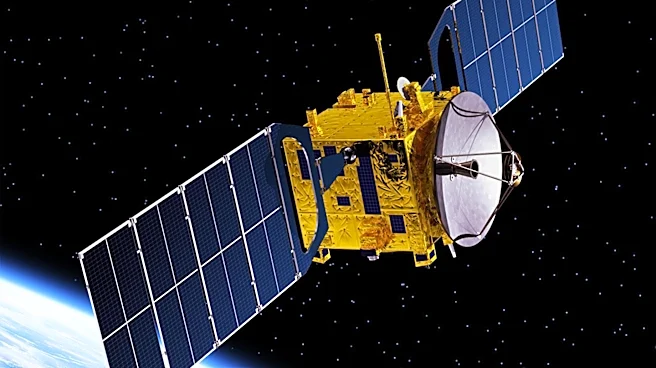
The European Union has taken a significant step forward in its satellite program, IRIS², by signing an implementation agreement with the SpaceRISE consortium and the European Commission. This program aims to provide secure, government-backed communication
services for EU institutions, critical infrastructure, and emergency responders. The agreement includes the addition of 66 satellites, bringing the total to 348, with launches expected to begin in 2029. The program is designed to enhance digital sovereignty and resilience in Europe, particularly in light of geopolitical tensions and reliance on foreign satellite services like Starlink.
Why It's Important?
The development of the IRIS² satellite program is crucial for the EU's strategic autonomy and digital sovereignty. By establishing its own satellite network, the EU aims to reduce dependence on foreign services, which can pose geopolitical and governance challenges. This initiative is particularly significant given the rising geopolitical volatility and conflicts, such as those in Ukraine and the Middle East. The program's focus on secure communication services for critical sectors underscores the importance of reliable infrastructure in maintaining national security and resilience.
What's Next?
As the IRIS² program progresses, the EU will continue to collaborate with domestic manufacturers and the European Space Agency to develop and validate the satellite infrastructure. The program's success could lead to further investments in digital infrastructure and innovation within the EU. Additionally, the initiative may prompt other regions to consider similar strategies to enhance their digital sovereignty and reduce reliance on foreign technology providers.