

What's Happening?
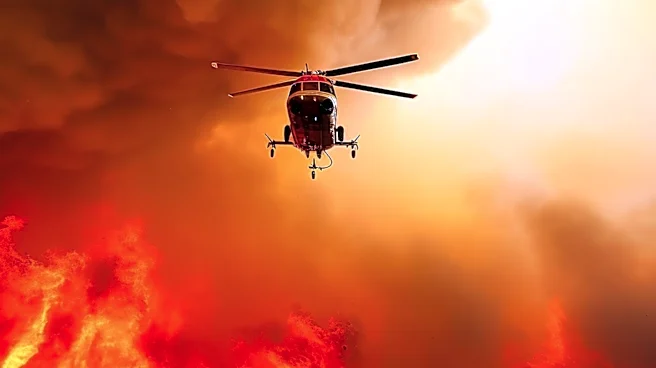
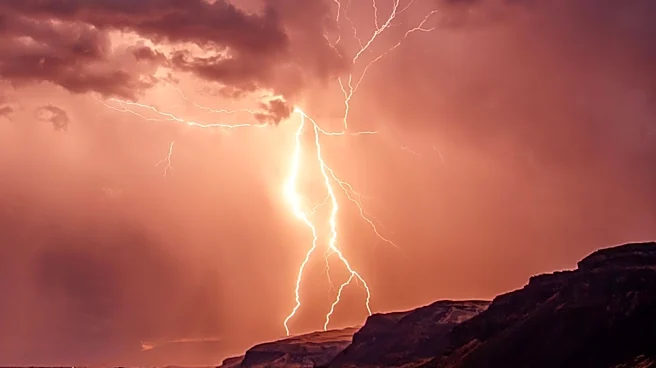
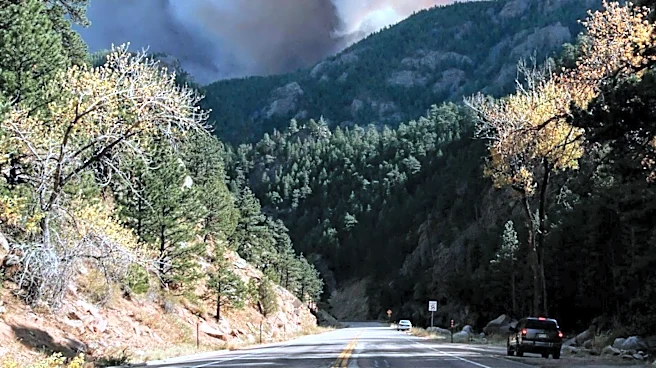
The Frijoles Fire in the Pecos Wilderness has grown to over 11,300 acres and is 9% contained as of Monday morning. The wildfire, sparked by lightning on August 4, has led to significant smoke plumes, causing health concerns for nearby communities. Officials
are warning that smoke will settle into valleys overnight, greatly diminishing air quality in areas such as Nambe Pueblo, Española, and Chimayó. The U.S. Environmental Protection Agency’s AirNow forecast predicts 'very unhealthy' smoke quality for Española on Monday evening, improving to 'unhealthy for sensitive groups' overnight. Santa Fe and Taos are also expected to experience unhealthy smoke levels until Tuesday afternoon. Over 650 personnel are actively fighting the fire, focusing on building containment lines along the northwestern and western edges of the blaze. Evacuation orders remain in effect for Camino de Cañón in Cundiyó, while the rest of Cundiyó and Cerro Piñón are on 'set' status, meaning residents should be prepared for potential evacuation. To aid firefighting efforts, parts of the Pecos Wilderness managed by the Española Ranger District, including several forest roads, the Borrego Mesa Campground, and numerous trails, have been closed. New Mexico State Road 503 is also closed between County Road 98 and State Road 76.
Why It's Important?
The Frijoles Fire's expansion and the resulting poor air quality pose significant public health risks, particularly for vulnerable populations such as the elderly, pregnant individuals, and those with heart or respiratory conditions. The New Mexico Department of Health has issued a '5-3-1' visibility rule, advising residents to limit outdoor activity or stay indoors based on smoke visibility, highlighting the immediate health impact on communities. Economically, the fire disrupts local tourism and outdoor recreation due to the closure of parts of the Pecos Wilderness, including campgrounds and trails, affecting businesses reliant on these activities. The extensive resources deployed, with over 650 firefighters, represent a substantial financial burden on state and federal agencies. Furthermore, the fire's impact on infrastructure, including the closure of New Mexico State Road 503, can hinder transportation and local commerce. The ongoing threat of evacuation for communities like Cundiyó creates social and economic instability for residents, potentially leading to displacement and property loss. The incident underscores the increasing challenges posed by wildfires in the U.S. Southwest, exacerbated by climate conditions, and the need for robust emergency response and public health measures.
What's Next?
Firefighting efforts will continue to focus on increasing containment, particularly along the northwestern and western sections of the Frijoles Fire perimeter. Officials will monitor weather patterns and wind directions closely, as these factors significantly influence smoke dispersion and fire behavior. Residents in affected areas, especially Nambe Pueblo, Española, Chimayó, Santa Fe, and Taos, should anticipate continued advisories regarding air quality and follow recommendations from the EPA and the New Mexico Department of Health, such as closing windows and using air filters. Evacuation orders for Camino de Cañón will remain in place, and residents in Cundiyó and Cerro Piñón on 'set' status should stay prepared for potential further evacuation orders from the Santa Fe County Fire Chief. The closures of parts of the Pecos Wilderness and New Mexico State Road 503 will persist until conditions are deemed safe, impacting access and recreational activities. Authorities will also continue to assess the fire's impact on local ecosystems and infrastructure, planning for post-fire recovery and rehabilitation efforts. The long-term implications for air quality and public health will be monitored, with potential for ongoing health advisories and support services for affected communities.
Beyond the Headlines
The Frijoles Fire highlights broader environmental and societal challenges facing the U.S. Southwest, particularly the increasing frequency and intensity of wildfires due to climate change. The prolonged fire season and the scale of this blaze underscore the strain on firefighting resources and the need for enhanced forest management strategies, including controlled burns and fuel reduction, to mitigate future risks. The health advisories related to smoke exposure bring attention to the long-term respiratory and cardiovascular impacts on communities, particularly those with pre-existing conditions, and the need for improved public health infrastructure to address these issues. The economic disruption caused by wilderness closures and potential property damage can have lasting effects on local economies, emphasizing the importance of resilient community planning and economic diversification. Furthermore, the incident may prompt discussions on the effectiveness of current emergency response protocols and inter-agency coordination in managing large-scale natural disasters. The fire also serves as a stark reminder of the delicate balance between human activity and natural ecosystems, and the critical need for sustainable land use practices to protect both the environment and public health.