



What's Happening?
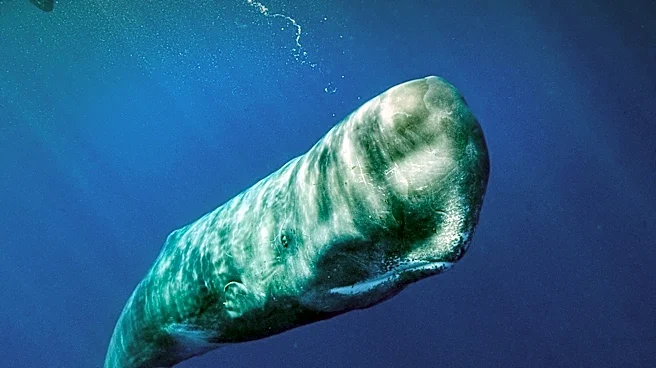
Recent research has uncovered fascinating insights into the sleep behavior of sperm whales, the largest toothed whales on the planet. These marine mammals, which must consciously breathe, cannot sleep like humans as they would risk drowning. Instead,
they likely engage in unihemispheric sleep, where one half of the brain remains active while the other rests, similar to dolphins. This allows them to remain vigilant to potential threats. The study, published in the Journal of Experimental Biology, reveals that sperm whales manage their buoyancy during rest by releasing bubbles. This behavior helps them maintain their position in the water column, preventing them from unintentionally surfacing. Researchers tagged 42 sperm whales with devices to record depth and bubble sounds, confirming that bubble release aids in buoyancy control. The study suggests that whales resting closer to the surface release more bubbles compared to those at greater depths, where compressed air in their lungs reduces buoyancy.
Why It's Important?
Understanding the sleep and buoyancy management of sperm whales is crucial for marine biology and conservation efforts. These findings highlight the sophisticated adaptations of sperm whales to their aquatic environment, showcasing their ability to maintain control even during rest. This research could inform conservation strategies by providing insights into the natural behaviors and needs of these creatures, potentially aiding in the protection of their habitats. Additionally, the study contributes to the broader understanding of marine mammal physiology and behavior, offering a glimpse into the complex lives of these ocean giants. The ability to maintain buoyancy during sleep is a remarkable adaptation that underscores the evolutionary ingenuity of sperm whales, which could inspire further research into other marine species with similar behaviors.
What's Next?
Future research may focus on further understanding the physiological mechanisms behind bubble release and its role in buoyancy control. Scientists might explore whether similar behaviors are present in other marine mammals and how these adaptations have evolved. Additionally, there could be investigations into the potential impacts of environmental changes, such as ocean temperature and pollution, on the sleep and buoyancy behaviors of sperm whales. Conservationists may use this information to develop more effective strategies for protecting these animals and their habitats, ensuring their survival in a rapidly changing world.
Beyond the Headlines
The study of sperm whales' sleep behavior opens up discussions on the broader implications of marine mammal conservation. As human activities increasingly impact ocean environments, understanding the natural behaviors of marine species becomes vital. This research highlights the importance of preserving the delicate balance of marine ecosystems, where even seemingly minor behaviors like bubble release play a critical role in the survival of species. It also raises questions about the potential effects of noise pollution and other human-induced changes on the sleep and overall well-being of marine mammals.