
What's Happening?
The U.S. Treasury has issued a warning to shippers regarding the payment of tolls to Iran for passage through the Strait of Hormuz. This advisory, released by the Office of Foreign Assets Control (OFAC),
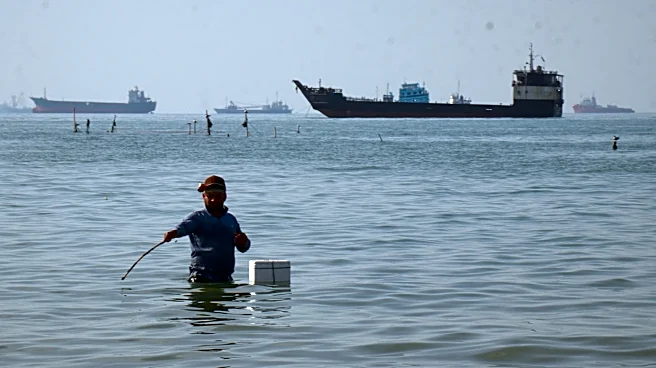
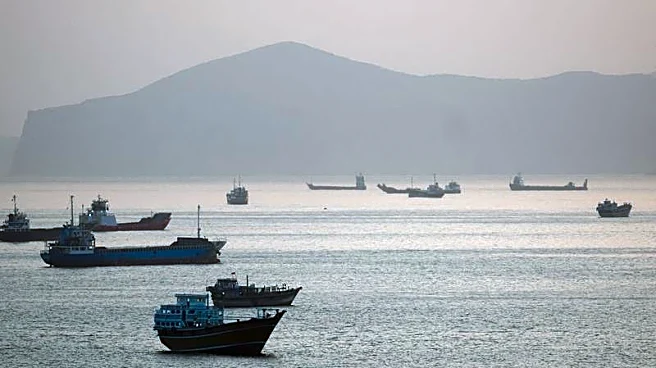
highlights the risk of punitive sanctions for any shipper making such payments, including those disguised as charitable donations to organizations like the Iranian Red Crescent Society. The Strait of Hormuz is a critical maritime route, with approximately 20% of the world's seaborne crude oil and liquefied natural gas passing through it. Iran has proposed these tolls as part of its strategy to end the ongoing conflict with Israel and the United States. The Treasury's warning comes amid reports of at least one $2 million payment made for safe passage through the Strait. Additionally, Iran has sent a proposal for negotiations to the U.S. via Pakistani mediators, potentially signaling a move towards resolving the conflict.
Why It's Important?
The U.S. Treasury's warning underscores the geopolitical tensions surrounding the Strait of Hormuz, a vital artery for global energy supplies. The imposition of tolls by Iran could disrupt international shipping and escalate tensions in the region, affecting global oil prices and supply chains. For U.S. and international shippers, compliance with the Treasury's advisory is crucial to avoid sanctions, which could have significant financial and operational repercussions. The advisory also reflects the broader U.S. strategy to exert economic pressure on Iran, aiming to curb its revenue streams and influence in the region. This development could impact U.S. foreign policy and its relations with allies and adversaries involved in the Middle East.
What's Next?
The situation in the Strait of Hormuz remains fluid, with potential diplomatic negotiations on the horizon. The U.S. and Iran may engage in talks facilitated by Pakistani mediators, which could lead to a de-escalation of tensions. However, the outcome of these negotiations is uncertain, and the risk of further sanctions or military confrontations persists. Shippers and international businesses will need to closely monitor developments and adjust their strategies accordingly to mitigate risks. The U.S. may also consider additional sanctions or diplomatic measures to counter Iran's tolling strategy and maintain stability in the region.