
What's Happening?
Oregon's U.S. Senators Jeff Merkley and Ron Wyden, along with Representatives Suzanne Bonamici, Val Hoyle, Andrea Salinas, Maxine Dexter, and Janelle Bynum, have collectively supported Governor Tina Kotek's
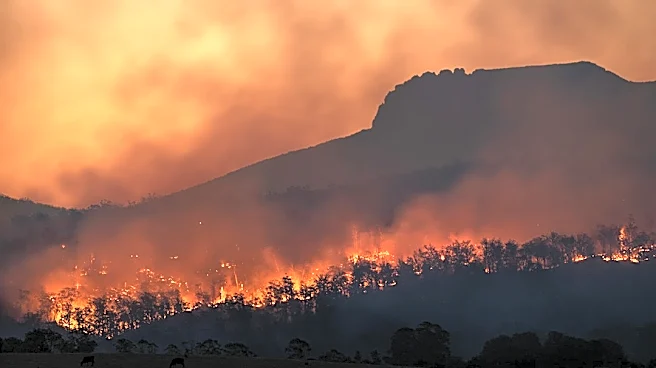
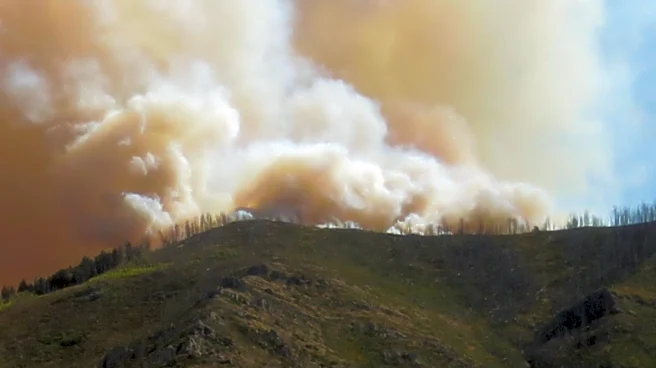
appeal to the Federal Emergency Management Agency (FEMA). They are urging FEMA to reconsider its denial of a Fire Management Assistance Grant (FMAG) for the East Evans Creek Fire, which occurred north of Rogue River, Oregon. The fire, which broke out on July 10, 2026, quickly spread due to dry conditions and high temperatures, eventually reaching over 15,700 acres. At its peak, it threatened more than 3,100 structures, resulted in the loss of one unoccupied structure, and led to hundreds of homes being under Level 3 'Go Now' evacuation orders. The state had initially requested financial assistance through the FMAG program to cover costs associated with emergency and firefighting activities, arguing that the fire constituted a major disaster under FEMA's criteria.
Why It's Important?
This appeal is critically important for Oregon, which faced a record-setting 2026 fire season with 1,873 distinct fires burning over 2.5 million acres. The denial of the FMAG for the East Evans Creek Fire places a significant financial burden on state and local resources that were extensively deployed to combat the blaze and protect lives and property. The FMAG program is designed to help states cover costs for fires with the potential to become major disasters, and the lawmakers' support underscores the severity of the incident and the substantial demands it placed on emergency services. A successful appeal would not only provide much-needed financial relief to Oregon but also affirm the federal government's role in supporting states grappling with increasingly frequent and intense natural disasters, particularly wildfires, which have significant economic and social impacts on affected communities.
What's Next?
FEMA will now need to review the appeal submitted by the State of Oregon, supported by its congressional delegation. The lawmakers have provided additional clarity and evidence to demonstrate that the East Evans Creek Fire met the criteria for an FMAG. If FEMA grants the appeal, it would retroactively approve the FMAG, ensuring that the necessary costs incurred by firefighters and state officials are covered. This decision could set a precedent for how similar wildfire incidents are evaluated for federal assistance in the future, especially as climate change continues to exacerbate wildfire seasons. The outcome will be closely watched by other states prone to wildfires, as it could influence their strategies for requesting and securing federal aid during disaster events.
Beyond the Headlines
The dispute over the FMAG for the East Evans Creek Fire highlights the complex and often contentious process of securing federal disaster aid. It underscores the challenges states face in meeting stringent federal criteria for assistance, even in the face of widespread destruction and significant resource deployment. This situation also brings to light the broader implications of climate change on disaster management, as states like Oregon are experiencing more frequent and severe wildfires. The financial strain on state and local governments from these events necessitates robust federal support, and denials of aid can have long-term consequences for recovery and preparedness efforts. The appeal also reflects the critical role of congressional advocacy in ensuring that states receive the necessary resources to respond to and recover from natural disasters, emphasizing the interplay between state and federal governance in emergency situations.