


What's Happening?
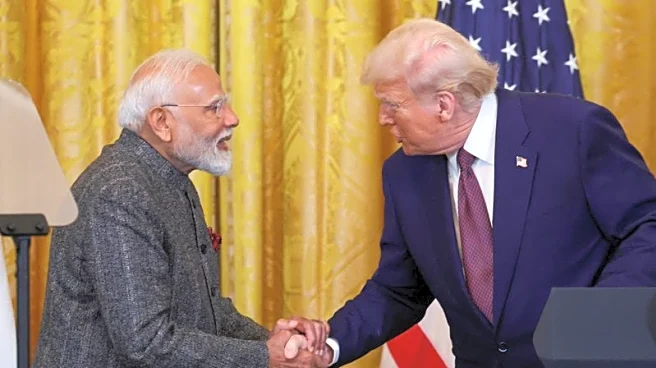
President Trump has announced a trade deal with India, urging the country to pivot away from Russian oil in favor of Venezuelan crude. This move is part of a broader strategy to limit Russia's oil revenue, which the U.S. claims is funding the war in Ukraine.
India, which has significantly increased its Russian oil imports since the conflict began, faces a complex decision. Analysts highlight that switching to Venezuelan oil would not be straightforward due to higher costs, logistical challenges, and the need for significant discounts to make Venezuelan oil financially viable. Despite the U.S. reducing tariffs on Indian goods as part of the deal, India has not publicly committed to ceasing Russian oil purchases, and logistical and economic factors complicate the potential switch.
Why It's Important?
The potential shift in India's oil sourcing has significant implications for global oil markets and geopolitical relations. A move away from Russian oil could disrupt global supply chains, potentially increasing oil prices and affecting India's economic growth. The U.S. aims to weaken Russia's financial position by reducing its oil revenue, but India's economic needs and existing infrastructure make a complete pivot challenging. The decision also impacts U.S.-India relations, as the U.S. seeks to strengthen ties with India while balancing its geopolitical strategy against Russia. The outcome could influence global oil prices, trade dynamics, and the strategic alliances of major oil-consuming nations.
What's Next?
India's decision on whether to switch from Russian to Venezuelan oil will depend on several factors, including economic viability, logistical feasibility, and geopolitical considerations. The U.S. may continue to exert pressure on India to reduce its reliance on Russian oil, while India will likely seek to balance its economic interests with diplomatic relations. The situation could lead to further negotiations between the U.S. and India, as well as potential adjustments in global oil supply chains. Additionally, India's response may influence other countries' strategies regarding Russian oil imports, potentially affecting global energy markets.
Beyond the Headlines
The broader implications of this development include potential shifts in global energy alliances and the economic impact on countries heavily reliant on Russian oil. The situation highlights the complexities of international trade and energy politics, where economic interests often intersect with geopolitical strategies. The decision also underscores the challenges faced by countries like India in navigating global pressures while ensuring energy security and economic stability. The outcome could set a precedent for how nations balance economic needs with international diplomatic pressures in the context of global conflicts.