

What's Happening?
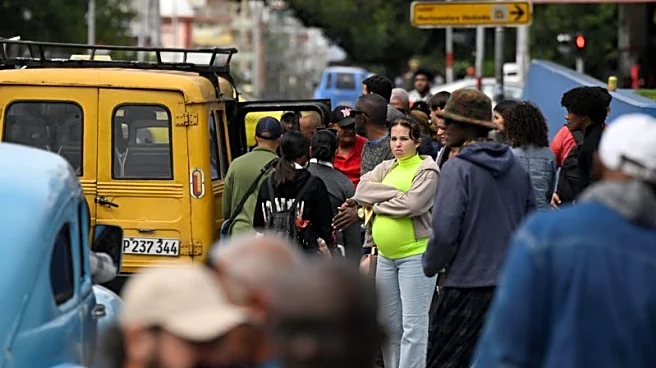
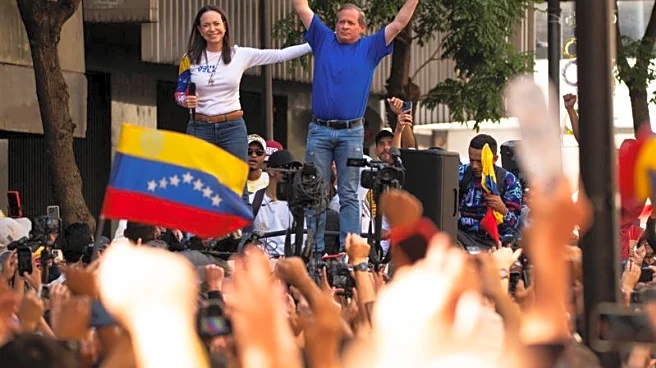
In Havana, tens of thousands of Cubans gathered at the 'Anti-Imperialist Tribune' near the U.S. Embassy to protest the U.S. government's actions in Venezuela, which included a raid that resulted in the death of 32 Cuban officers. These officers were part
of the security detail for former Venezuelan President Nicolás Maduro, who was arrested by U.S. forces on January 3 to face drug trafficking charges. The demonstration, organized by the Cuban government, featured participants waving Cuban and Venezuelan flags and was attended by President Miguel Díaz-Canel. The event was a response to heightened tensions between Cuba and the U.S., following President Trump's demand for Cuba to negotiate a deal with the U.S. and his assertion that Cuba would no longer benefit from Venezuelan oil and financial support.
Why It's Important?
The demonstration underscores the ongoing geopolitical tensions between the U.S. and Cuba, exacerbated by U.S. actions in Venezuela. The arrest of Maduro and the death of Cuban officers have intensified anti-U.S. sentiment in Cuba, potentially impacting diplomatic relations. The U.S. sanctions, tightened under President Trump, have already strained Cuba's economy, leading to severe blackouts. The Cuban government's response highlights its reliance on Venezuelan support and the potential economic and political fallout if this support diminishes. The situation could further isolate Cuba internationally and deepen its economic challenges, affecting the Cuban populace and regional stability.
What's Next?
Cuba is likely to continue its public demonstrations and diplomatic efforts to rally international support against U.S. actions. The Cuban government may seek to strengthen alliances with other nations opposed to U.S. policies, potentially leading to increased regional tensions. The U.S. may face international scrutiny over its actions in Venezuela and its impact on Cuban sovereignty. Future negotiations or diplomatic engagements between the U.S. and Cuba could be influenced by these developments, with potential implications for U.S. foreign policy in Latin America.