






What's Happening?
The United States has committed over $300 million in aid to Venezuela in response to two powerful earthquakes that struck the country, causing widespread devastation. The earthquakes, measuring 7.2 and 7.5 in magnitude, have resulted in over 1,700 confirmed
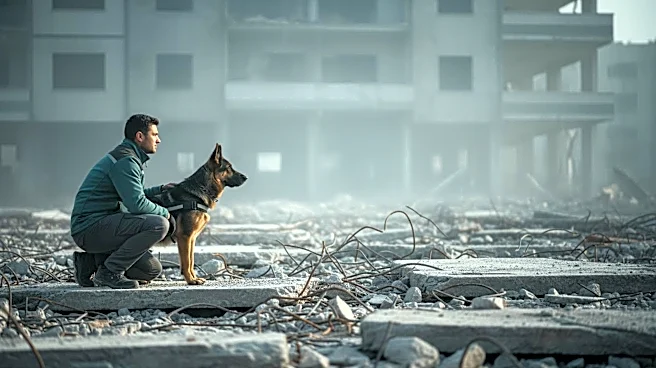
deaths, with tens of thousands still missing. The US aid package includes provisions for water, sanitation, food, and medical care. Additionally, US marines are assisting in repairing the port in La Guaira, which was heavily damaged, to facilitate the delivery of supplies. The international community, including countries like Argentina and the UK, has also sent search and rescue teams equipped with sound detectors, dogs, and thermal imaging equipment to aid in recovery efforts. Despite these efforts, many Venezuelans are left to search for their loved ones amidst the rubble, highlighting the dire need for continued humanitarian assistance.
Why It's Important?
The US aid to Venezuela is significant as it marks a rare instance of cooperation between the two nations, especially given the strained relations in recent years. This assistance is crucial in addressing the immediate humanitarian needs of the Venezuelan population affected by the earthquakes. The disaster has exacerbated existing challenges in Venezuela, a country already grappling with economic instability and political turmoil. The aid not only provides immediate relief but also underscores the importance of international collaboration in disaster response. For the US, this move could potentially improve diplomatic relations and influence in the region, while for Venezuela, it offers a lifeline in a time of crisis. The situation also highlights the need for improved infrastructure and emergency preparedness in Venezuela to mitigate the impact of future natural disasters.
What's Next?
As the recovery efforts continue, the focus will likely shift towards rebuilding and addressing the long-term needs of the affected communities. The Venezuelan government, with international support, will need to prioritize restoring infrastructure and providing sustainable solutions for displaced individuals. The ongoing aftershocks pose a continued threat, necessitating vigilance and preparedness for further seismic activity. Additionally, the political dynamics between the US and Venezuela may evolve as a result of this cooperation, potentially opening avenues for dialogue and improved relations. However, challenges remain, including ensuring the effective distribution of aid and addressing the underlying political and economic issues that have compounded the disaster's impact.
Beyond the Headlines
The earthquakes have exposed the vulnerabilities in Venezuela's infrastructure and governance, raising questions about accountability and the need for systemic reforms. The collapse of buildings constructed during the socialist revolution, reportedly with substandard materials, points to corruption and mismanagement. This disaster could serve as a catalyst for change, prompting calls for transparency and better governance. The presence of US military personnel, once unthinkable, reflects a shift in geopolitical dynamics and could influence future interactions between the two countries. The situation also highlights the role of civil society in disaster response, as local groups have been instrumental in organizing relief efforts and advocating for accountability.