





What's Happening?
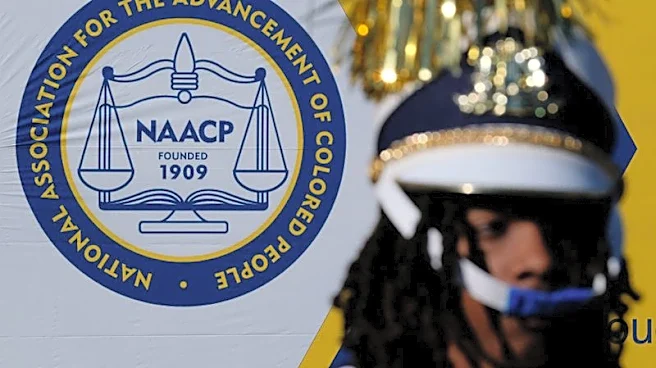
The NAACP has launched the 'Out of Bounds' campaign, encouraging Black athletes at public universities in Alabama, Florida, Georgia, Louisiana, Mississippi, Texas, and South Carolina to boycott their athletic programs. This initiative is a response to a recent
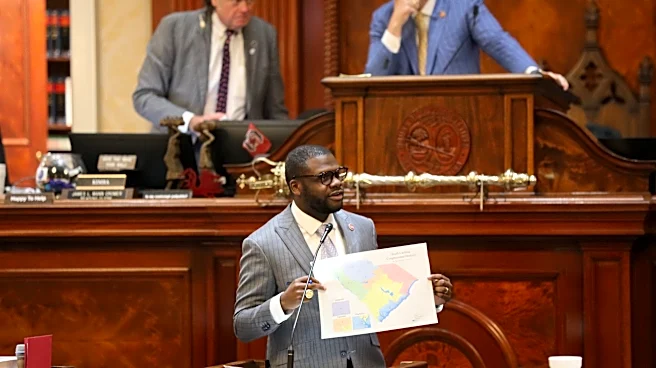
U.S. Supreme Court decision that struck down a congressional map in Louisiana, which the court deemed relied excessively on race. The NAACP's campaign targets Power 4 conference schools in the Southeastern Conference, Atlantic Coast Conference, and Big 12, which could face significant impacts. Derrick Johnson, president of the NAACP, emphasized that Black athletes should not contribute to the wealth and prestige of state institutions that simultaneously undermine Black political power. The Congressional Black Caucus has also expressed opposition to the SCORE Act, which aims to unify athletes' contracting rights nationwide.
Why It's Important?
This boycott call by the NAACP highlights ongoing racial and political tensions in the U.S., particularly concerning voting rights and representation. The Supreme Court's decision and the subsequent NAACP campaign underscore the complex relationship between sports, politics, and race. The potential boycott could significantly impact university athletic programs, which rely heavily on the participation of Black athletes for revenue and prestige. This move also brings attention to broader issues of racial equity and representation in states where political power is perceived to be systematically undermined. The campaign could influence public opinion and policy discussions around race and voting rights in the affected states.
What's Next?
The NAACP's campaign may lead to increased scrutiny of university athletic programs and their role in state politics. If the boycott gains traction, it could prompt universities and state governments to reconsider their policies and practices regarding racial representation and voting rights. Additionally, ongoing litigation in states like Georgia and Louisiana may further influence the political landscape and the effectiveness of the NAACP's campaign. The response from universities, athletes, and political leaders will be crucial in determining the campaign's impact and any potential policy changes.