



What's Happening?
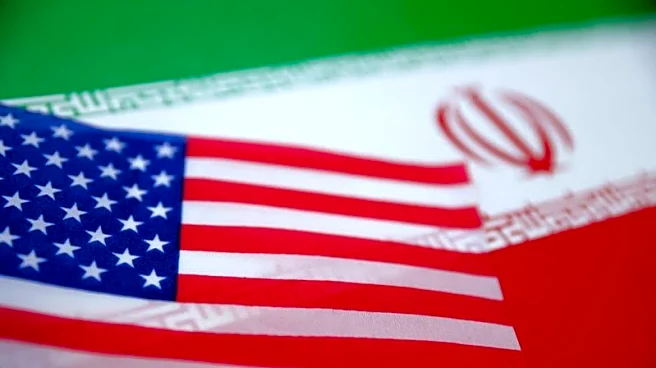
The United States and Iran are engaging in their third round of talks in Geneva, mediated by Oman, as tensions escalate in the Middle East. President Trump has deployed a significant number of warships and aircraft to the region, including the USS Gerald
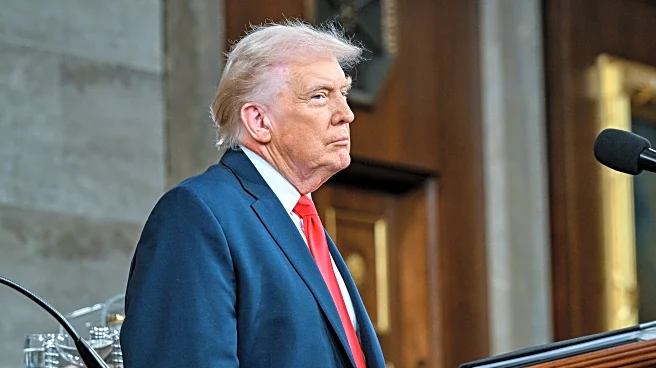
R. Ford, the world's largest aircraft carrier, which recently departed from a naval base in Greece. The U.S. aims to persuade Iran to halt its uranium enrichment and missile production. U.S. special envoy Steve Witkoff is meeting with Iranian Foreign Minister Abbas Araghchi to negotiate these terms. President Trump has emphasized his preference for diplomacy but remains firm on preventing Iran from acquiring nuclear weapons.
Why It's Important?
The outcome of these talks could significantly impact regional stability and global security. The U.S. military buildup underscores the seriousness of the situation, as any failure in diplomacy could lead to heightened military conflict. The negotiations are crucial for preventing nuclear proliferation in the Middle East, which could trigger a regional arms race. The talks also reflect broader U.S. foreign policy objectives under President Trump, who has taken a hardline stance against Iran. Success in these negotiations could lead to a de-escalation of tensions and a potential shift in U.S.-Iran relations.
What's Next?
The continuation of talks depends on Iran's willingness to comply with U.S. demands. If negotiations fail, the U.S. may increase its military presence or impose further sanctions on Iran. The international community will closely monitor the situation, as any escalation could have widespread implications. The U.S. and its allies may also seek to strengthen diplomatic efforts to bring Iran back to the negotiating table if current talks do not yield results.