









What's Happening?
Recent escalations between Iran and Israel have heightened concerns over oil supply disruptions in the Middle East. Iran's threats to close the Bab el-Mandeb Strait, a critical chokepoint for global oil exports, have raised alarms. The Islamic Revolutionary
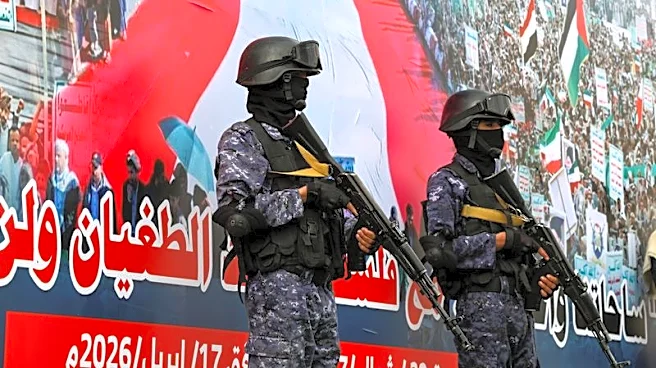
Guard Corps (IRGC) has previously threatened to close this strait, and their Houthi allies in Yemen could potentially attack tankers, further disrupting oil traffic. The Bab el-Mandeb Strait is crucial for Saudi Arabia's oil exports, especially since the closure of the Strait of Hormuz. Saudi Arabia has been using its East-West pipeline to the Yanbu port at full capacity to mitigate the impact of the Hormuz closure. However, any disruption at Bab el-Mandeb could significantly reduce Saudi oil exports, affecting global oil supply and prices.
Why It's Important?
The potential closure of the Bab el-Mandeb Strait could have severe implications for the global oil market. Saudi Arabia, the world's top crude exporter, relies heavily on this route for its oil exports. A disruption could lead to a significant reduction in oil supply, exacerbating the current global energy crisis. This would likely cause oil prices to spike, impacting economies worldwide. Asian countries, major importers of Middle Eastern oil, would face increased costs and supply shortages. The situation underscores the geopolitical risks in the region and their potential to destabilize global markets.
What's Next?
If the Houthi rebels disrupt traffic through the Bab el-Mandeb Strait, Saudi Arabia may need to reroute its oil exports via the Suez Canal and around the Cape of Good Hope, significantly increasing transit times and costs. This would further strain the global oil supply chain and could lead to higher oil prices. The international community may need to engage in diplomatic efforts to de-escalate tensions and ensure the security of vital shipping routes. Monitoring the situation closely will be crucial for stakeholders in the oil industry and global markets.
Beyond the Headlines
The ongoing tensions highlight the vulnerability of global oil supply chains to geopolitical conflicts. The reliance on a few critical chokepoints for oil transportation makes the market susceptible to disruptions. This situation may prompt countries to seek alternative energy sources or routes to reduce dependency on volatile regions. Additionally, it raises questions about the long-term stability of oil-dependent economies and the need for diversification.