



What's Happening?
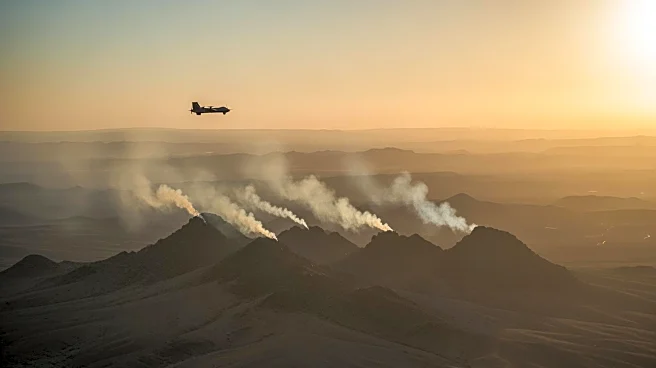
U.S. and Somali forces have launched an air strike targeting a militant stronghold in southern Somalia, specifically focusing on Islamist fighters. The operation, which took place in Hargeisa Yarey village near Jilib, resulted in the deaths of 15 militants
and injuries to eight others, according to Somali officials. This strike is part of ongoing efforts to dismantle the network of senior al-Shabaab members, including the recently killed explosives specialist Abdullahi Osman Mohamed, also known as 'Engineer Ismail.' Somali Defence Minister Ahmed Moalim Fiqi described the raid as a significant blow to al-Shabaab's operational capabilities. However, al-Shabaab disputed these claims, stating that the attack failed and resulted in civilian casualties. Independent verification of these claims has not been made available.
Why It's Important?
The air strike underscores the continued U.S. military involvement in Somalia, aimed at countering the influence of al-Shabaab, a group that remains entrenched in parts of southern and central Somalia. The operation highlights the strategic importance of Somalia in U.S. foreign policy, particularly in the context of broader geopolitical considerations in the Horn of Africa. The dismantling of al-Shabaab's bomb-making networks is crucial for the safety of civilians and the protection of government institutions and economic routes in Somalia. The U.S. involvement also reflects ongoing policy discussions in Washington regarding engagement in the region, influenced by domestic political controversies and international security concerns.
What's Next?
Future operations are likely as Somali and U.S. forces continue to target al-Shabaab's leadership and infrastructure. The Somali government, with international support, aims to weaken the group's hold on the region. However, al-Shabaab's ability to maintain influence through taxation and enforcement of its rule suggests that a long-term strategy will be necessary to achieve lasting stability. The U.S. may continue to evaluate its military and diplomatic strategies in the region, balancing counterterrorism efforts with broader geopolitical interests.