




What's Happening?
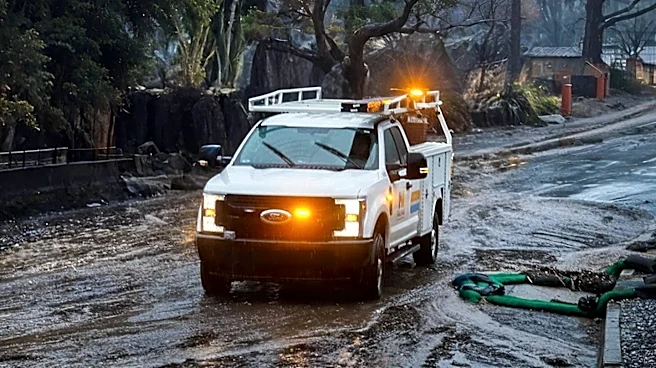
Rep. Eli Crane (R-AZ) is actively engaged in flood recovery efforts and advancing legislative priorities for rural communities in Arizona's Second Congressional District as the 119th Congress concludes. Following recent floods, Rep. Crane and his team
have visited affected areas like Camp Verde, Prescott, and Kayenta, meeting with local officials, law enforcement, and first responders to assess damage and immediate needs. He also met with Flagstaff Mayor Becky Daggett and City Manager Joanne Keene to discuss storm recovery and the Rio de Flag project, aimed at reducing flood risk. Crane is in communication with FEMA Administrator Cameron Hamilton and Governor Katie Hobbs' office to support potential major disaster declarations. His office has also resolved 4,017 constituent cases since January 2023, recovering over $12 million in delayed payments such as tax refunds and veterans' benefits. Additionally, Rep. Crane introduced the Rural Disaster Fairness Act of 2026 to ease federal aid access for counties with limited taxable land and supported the Water Resources Development Act (WRDA) of 2026 to authorize flood control and water infrastructure projects across Arizona.
Why It's Important?
Rep. Crane's focus on flood recovery and rural priorities is crucial for Arizona, particularly for communities frequently impacted by natural disasters and those with unique infrastructure challenges. The Rural Disaster Fairness Act of 2026 addresses a significant disparity in federal aid eligibility, potentially providing much-needed relief to counties with large federal land holdings that limit their tax base and ability to fund disaster response. This legislative effort could set a precedent for how federal disaster assistance is allocated nationwide, ensuring a more equitable distribution of resources. Furthermore, his support for the Water Resources Development Act (WRDA) directly impacts the safety and economic stability of areas like Dudleyville and Globe by authorizing critical flood protection and water infrastructure projects. The ongoing casework by his office, which has recovered millions for constituents, highlights the tangible benefits of congressional representation in navigating federal bureaucracy, directly improving the financial well-being of Arizonans.
What's Next?
Rep. Crane will continue to advocate for swift approval of any major disaster declarations requested by Arizona's Governor or Tribal Chief Executives. The Rural Disaster Fairness Act of 2026 will proceed through the legislative process, with potential for debate and amendments in Congress. Its passage would significantly alter FEMA's criteria for disaster aid, benefiting numerous rural counties across the U.S. The Water Resources Development Act (WRDA) of 2026, having cleared the House, will move to the Senate for further consideration, with its final passage determining the authorization of various water projects in Arizona and nationwide. Rep. Crane's office will also maintain its constituent services, assisting Arizonans with federal agency issues and continuing mobile office hours to reach residents across the district. Further legislative initiatives addressing rural Arizona's needs, such as reliable electricity and veteran care, are also anticipated.
Beyond the Headlines
The legislative efforts spearheaded by Rep. Crane, particularly the Rural Disaster Fairness Act, highlight a broader systemic issue regarding federal disaster aid distribution and its impact on rural economies. The current FEMA criteria, which often disadvantage counties with significant federal land, underscore a need for policy adjustments that recognize the unique fiscal constraints of these areas. This could lead to a re-evaluation of how federal agencies assess local capacity for disaster response and recovery, potentially fostering more resilient rural communities. Furthermore, the focus on improving infrastructure for water, flood control, and electricity in rural Arizona points to the ongoing challenges of equitable resource allocation and development in less populated regions. The bipartisan nature of some of these initiatives, like the Tribal Veterans Voucher Flexibility Act, suggests a potential for broader cooperation on issues affecting vulnerable populations, transcending typical political divides.