
What's Happening?
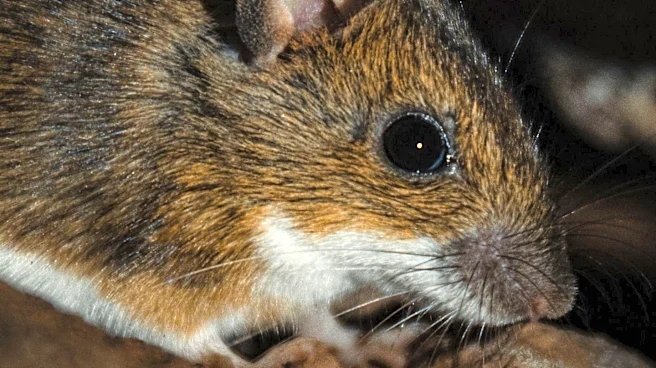
A recent study published in Neuron has identified a specific type of sensory neuron in mice that is responsible for transmitting the sensation of itch. The research, conducted by biologists at the University
of Michigan, focused on vellus-like hairs in mice, which are connected to fast-conducting sensory neurons. These neurons transmit the sensation of itch with a light touch. The study suggests that these findings could be significant for developing treatments for human conditions such as eczema and insect bites. The researchers discovered that these neurons are modulated by a protein called Piezo2 and are transmitted by TLR5+ sensory neurons. This discovery could lead to new pathways for treating chronic itch in humans.
Why It's Important?
The identification of specific neurons responsible for itch sensation in mice could have significant implications for human health. Chronic itch is a common symptom in various skin conditions, and current treatments are often inadequate. By understanding the neuronal pathways involved in itch, researchers can develop targeted therapies that could provide relief for individuals suffering from chronic itch. This research highlights the potential for using mice as test subjects to explore treatments for human itchy ailments, given the similarities in the itch reflex between mice and humans. The study opens up new avenues for research and development in dermatology and neurology.
What's Next?
Future research will likely focus on translating these findings from mice to humans. Scientists may explore the development of drugs or therapies that target the identified neurons to alleviate chronic itch in humans. Clinical trials could be conducted to test the efficacy and safety of such treatments. Additionally, further studies may investigate the role of Piezo2 and TLR5+ sensory neurons in other sensory processes, potentially leading to broader applications in sensory neuroscience.