





What's Happening?
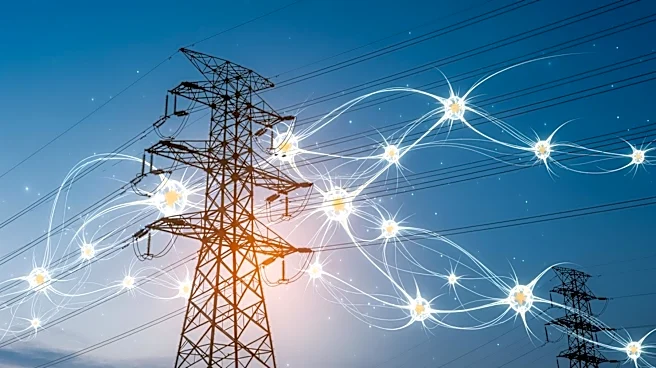
The House Committee on Energy and Commerce is addressing the challenge of integrating more electricity into the grid to support the growing demands of artificial intelligence (AI) technologies. During a recent hearing, energy executives and state utility
leaders discussed seven proposals aimed at enhancing grid reliability and efficiency. These proposals include federal studies on grid improvements, measures to prevent residents from bearing the cost increases from data centers, and options for states to opt out of new power line costs. The discussions reflect a bipartisan acknowledgment of the need to modernize the grid, though there is skepticism about the financial implications of expanding power lines.
Why It's Important?
The discussions in the House Committee are crucial as they address the intersection of energy infrastructure and emerging technologies like AI. The outcome of these talks could significantly impact how the U.S. manages its energy resources and supports technological advancements. Ensuring a reliable and efficient grid is essential for economic growth and technological innovation, particularly as AI becomes more integrated into various sectors. The proposals also highlight the need to balance technological progress with consumer protection, ensuring that residents are not unduly burdened by infrastructure costs. This debate is a critical step in shaping future energy policies and infrastructure investments.
What's Next?
As the House Committee continues its deliberations, further discussions and potential legislative actions are expected. The proposals may undergo revisions based on feedback from stakeholders, including energy companies, state utilities, and consumer advocacy groups. The committee's decisions will likely influence future energy policies and infrastructure projects, with implications for how the U.S. supports AI and other emerging technologies. Stakeholders will be closely monitoring these developments to understand the potential impacts on energy costs, grid reliability, and technological innovation.