






What's Happening?
Airengy, an energy company listed on the Tel Aviv Stock Exchange, has entered into a partnership with Nobian, a European producer of high-purity salt and chemicals, to develop a 2.5-gigawatt-hour compressed air energy storage (CAES) facility in Denmark.
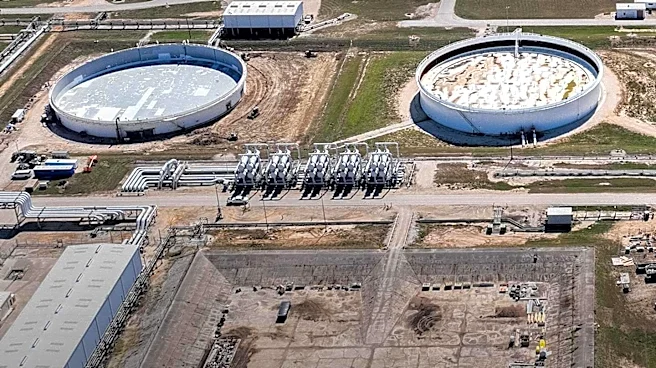
This facility will utilize an existing salt cavern operated by Nobian. Under the agreement, Nobian will handle the regulatory and permitting processes, local communication, stakeholder management, and infrastructure related to the salt cavern, while retaining its license and operational control. Airengy will focus on the design and implementation of its AirBattery system, which includes air compression and electricity generation using its proprietary technology. This initiative is part of Airengy's broader strategy to establish large-scale power plants in Europe, following initial projects in Romania and England.
Why It's Important?
The development of the CAES facility in Denmark represents a significant advancement in sustainable energy storage solutions. Compressed air energy storage is a promising technology for long-duration energy storage, which is crucial for balancing supply and demand in renewable energy systems. By leveraging existing salt caverns, the project minimizes environmental impact while enhancing energy storage capacity. This collaboration between Airengy and Nobian could set a precedent for similar projects across Europe, potentially accelerating the transition to renewable energy sources. The success of this project could also influence energy policies and investment strategies, encouraging further innovation and adoption of sustainable technologies.
What's Next?
As the project progresses, key milestones will include the completion of regulatory approvals and the commencement of construction activities. Stakeholder engagement and local community communication will be critical to ensure smooth project execution. The successful deployment of the AirBattery system in Denmark could lead to further collaborations between Airengy and Nobian, as well as other energy companies looking to invest in CAES technology. Additionally, the project's outcomes may influence future energy storage projects and policies in Europe and beyond.