







What's Happening?
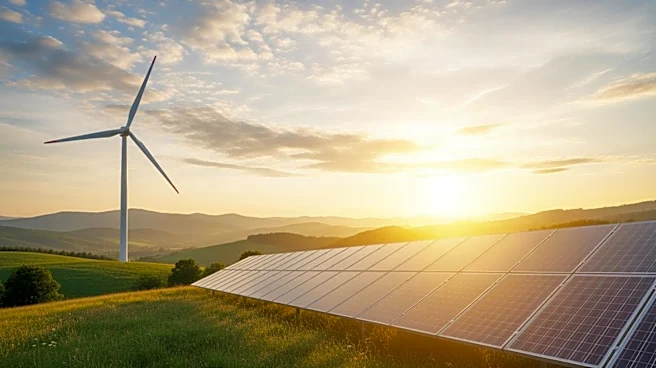
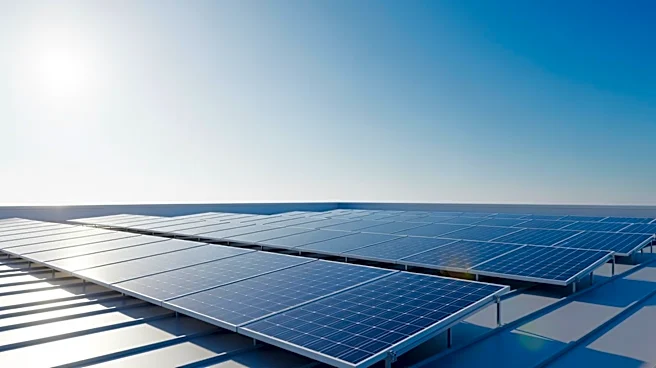
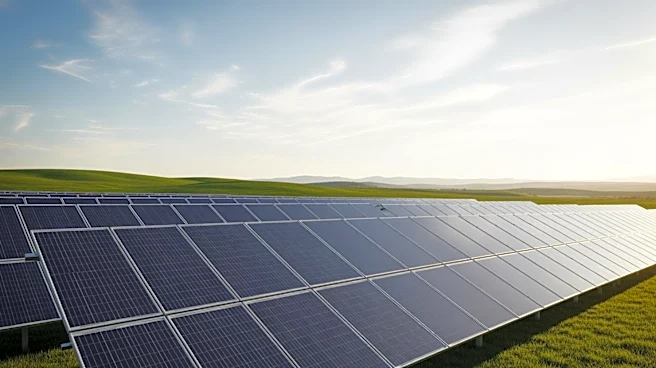
The UK has achieved a record number of solar installations, with 269,000 completed in the past year, marking a 37% increase from 2024. This surge in solar energy deployment is part of the UK's strategy to enhance energy security and reduce reliance on volatile
fossil fuel markets. Energy Secretary Ed Miliband emphasized the importance of this growth in providing energy security and reducing exposure to fossil fuel market fluctuations. The UK surpassed two million total solar installations in March 2026, with a significant portion on household rooftops. In April 2026, the UK grid operated on 98.8% zero-carbon energy sources for a brief period, highlighting the country's progress in renewable energy adoption. The Department for Energy Security and Net Zero (DESNZ) has also released an Energy Sector Cyber Security strategy to safeguard the clean energy system against evolving cyber threats.
Why It's Important?
The UK's record-breaking solar growth is crucial for enhancing energy security and reducing dependency on fossil fuels, especially amid global energy market volatility. The increase in solar installations provides households and businesses with more control over their energy bills, offering a buffer against rising energy prices driven by geopolitical tensions. The government's focus on cyber security in the energy sector is vital to maintaining the resilience of the national grid as it transitions to cleaner energy sources. This development not only supports the UK's climate goals but also sets a precedent for other nations aiming to bolster their renewable energy infrastructure while ensuring system security.
What's Next?
The UK government is expected to continue its efforts to expand renewable energy capacity and enhance grid security. The implementation of the Energy Sector Cyber Security strategy will involve collaboration with various stakeholders, including Ofgem, the National Cyber Security Centre, and the National Energy System Operator. As the UK progresses towards a cleaner energy future, further investments in renewable energy technologies and infrastructure are anticipated. The ongoing conflict in the Middle East and rising gas prices may drive more households and businesses to adopt solar energy solutions, further accelerating the transition to renewable energy.