
What's Happening?
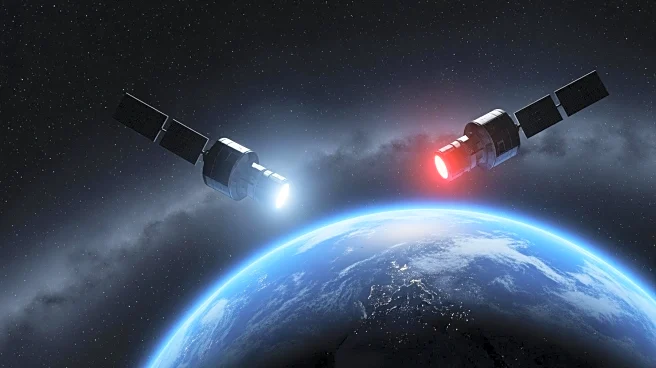
SpaceX has raised concerns about a recent deployment of nine Chinese satellites that came dangerously close to one of its Starlink satellites. According to Michael Nicolls, SpaceX's vice president of Starlink engineering,
the Chinese satellites, launched by CAS Space on a Lijian-1 rocket from China's Jiuquan Satellite Launch Center, approached within 200 meters of the Starlink-6079 satellite at an altitude of 560 kilometers. Nicolls highlighted the lack of coordination or deconfliction with existing satellites as a significant risk factor in space operations. CAS Space responded to the concerns by stating that the incident occurred nearly 48 hours after payload separation, suggesting that the issue might need to be addressed by satellite operators.
Why It's Important?
The incident underscores the growing challenges of satellite traffic management in space, as more countries and companies launch satellites. The close approach of the Chinese satellites to a Starlink satellite highlights the potential for collisions, which could have significant implications for space safety and the sustainability of satellite operations. The lack of coordination between satellite operators increases the risk of accidents, which could lead to debris that endangers other satellites and space missions. This situation emphasizes the need for international cooperation and regulatory frameworks to ensure safe and sustainable space operations.
What's Next?
The incident may prompt discussions among international space agencies and satellite operators to establish better coordination and communication protocols. SpaceX and other satellite operators might advocate for stricter regulations and agreements to prevent similar occurrences in the future. The event could also lead to increased scrutiny of satellite launches and operations, potentially influencing future policies and agreements on space traffic management.