







What's Happening?
Vermont's regular deer hunting season has commenced, introducing a significant rule change for the first time in 39 years. Hunters with special antlerless deer permits are now permitted to harvest deer without antlers during the regular rifle season,
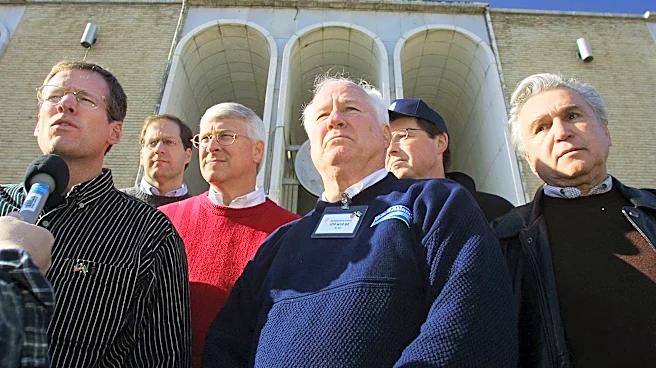
which runs from November 14 to November 29. This new regulation, implemented by the Vermont Fish and Wildlife Department, aims to better manage deer populations in areas where numbers have become excessively high. At a deer check station in Barre, hunters shared diverse reactions to the change. While some, like Gary Pletzer, view hunting as a family tradition where the harvest is a bonus, others, such as Kenneth Fritjofson, expressed mixed feelings, noting their usual preference for not shooting does. The department allocated 12,050 antlerless deer permits across 19 of Vermont's 21 wildlife management units through a lottery in August. Each permit allows a hunter to harvest one antlerless deer in a designated unit during an eligible season. Biologists collect data at check stations to assess deer population health and inform future regulations.
Why It's Important?
This rule change represents a significant shift in wildlife management policy within Vermont, directly impacting the state's deer population and hunting community. The Vermont Fish and Wildlife Department's decision to allow antlerless deer harvesting during the regular rifle season underscores a proactive approach to ecological balance, particularly in regions experiencing overpopulation. This could lead to healthier deer herds by reducing competition for resources and mitigating the spread of diseases. For hunters, the new regulation alters long-standing traditions and practices, potentially requiring adjustments in hunting strategies and expectations. While some may embrace the opportunity to contribute to population management, others might find it challenging to adapt to a departure from traditional antlered deer hunting. The success of this initiative will be closely monitored through data collected at check stations, providing valuable insights into effective wildlife conservation strategies that could influence similar policies in other states facing comparable deer management challenges.
What's Next?
The Vermont Fish and Wildlife Department will continue to monitor the impact of the new antlerless deer permit rule throughout the current hunting season and in subsequent years. Data collected at big game reporting stations, including information on weight, antler size, and age from teeth samples, will be crucial for evaluating the effectiveness of the regulation. This ongoing assessment will help wildlife officials understand population trends and determine future hunting regulations. Hunters are required to report all harvested deer in person at these stations. The department will likely use this information to refine permit allocations and management strategies for upcoming seasons. The mixed reactions from hunters suggest that public engagement and education will be important for the long-term acceptance and success of such policy changes. Future discussions may involve further adjustments to hunting seasons or permit systems based on ecological outcomes and community feedback.
Beyond the Headlines
The introduction of antlerless deer permits during Vermont's regular rifle season highlights a broader ecological and cultural tension between traditional hunting practices and modern wildlife management imperatives. While the immediate goal is to control deer populations for ecological health, the policy also touches upon the evolving role of hunters as stewards of the environment. The hesitation expressed by some long-time hunters, who traditionally avoid shooting does, reflects a deeply ingrained aspect of hunting culture that prioritizes the pursuit of trophy animals or specific types of game. This policy challenges those norms, asking hunters to participate in a more direct form of population control. The success of such initiatives often depends not just on scientific justification but also on the ability to integrate new practices into established cultural frameworks. This could lead to a re-evaluation of what constitutes 'successful' hunting, shifting the focus from individual harvest to collective ecological benefit, and potentially influencing how future generations perceive their role in conservation.