






What's Happening?
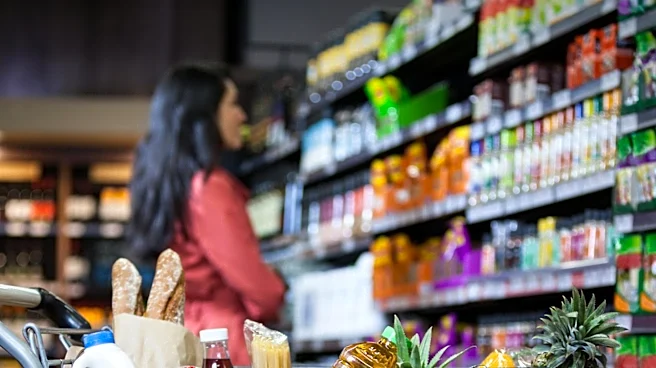
As grocery prices in the U.S. reach a 50-year high, many Americans are altering their shopping habits to cope with the increased costs. The price of food for home consumption has risen by 33% since 2019, driven by factors such as supply chain disruptions,
natural disasters, and geopolitical tensions. Consumers are increasingly turning to couponing, comparison shopping, and cutting back on non-essential items to manage their budgets. The economic strain is particularly felt by low-income families, who spend a larger portion of their income on food.
Why It's Important?
The surge in grocery prices has significant implications for American households, particularly those with limited financial flexibility. As food costs rise, families may face difficult choices about their spending priorities, potentially impacting nutrition and overall well-being. The situation also highlights broader economic challenges, such as wage stagnation and inflation, which could influence public policy and political discourse. The issue of food affordability is likely to be a key topic in upcoming elections, as policymakers seek solutions to alleviate the financial burden on consumers.
What's Next?
In response to rising food prices, consumers may continue to adapt their shopping strategies, while businesses and policymakers explore ways to stabilize costs. Potential measures could include increasing food assistance programs or implementing policies to address supply chain inefficiencies. The ongoing economic pressures may also prompt discussions about wage growth and inflation control, as stakeholders seek to balance consumer needs with economic stability.