







What's Happening?
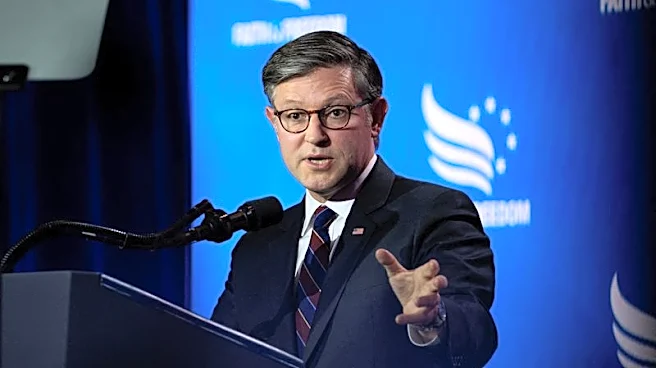
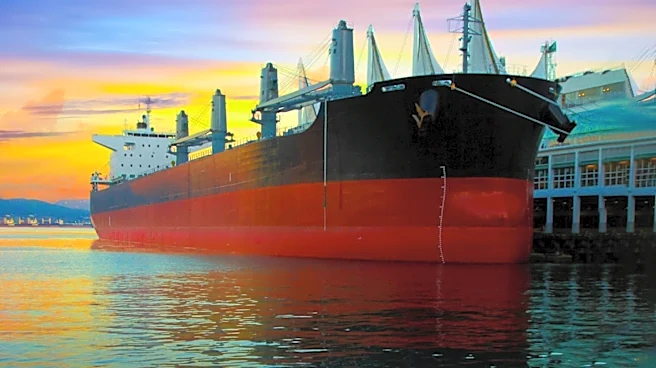
Congressman James Comer, Speaker of the House Mike Johnson, and other Republican lawmakers have called on the Trump Administration to let the current Jones Act waiver expire as planned. The Jones Act mandates that cargo transported between U.S. ports
must be carried on American-built, owned, crewed, and flagged vessels. The waiver, initially issued to mitigate rising fuel and fertilizer costs, has allowed foreign-flagged ships to operate in domestic commerce, even when U.S.-flagged vessels were available. The lawmakers argue that this waiver undermines the U.S. maritime industry by allowing foreign operators, who are not subject to U.S. taxes or regulations, to dominate the market. They emphasize the importance of the Jones Act in maintaining a strong maritime industrial base, which is crucial for national economic and security interests.
Why It's Important?
The expiration of the Jones Act waiver is significant for the U.S. maritime industry, which plays a vital role in the national economy by transporting over 760 million tons of cargo annually. The waiver has been criticized for enabling foreign competitors to exploit a loophole, potentially weakening the U.S. maritime sector. By allowing the waiver to expire, the U.S. could reinforce its maritime dominance and protect domestic jobs. The Jones Act supports a robust commercial fleet and sustains well-paying maritime jobs, contributing to economic stability. The decision to end the waiver aligns with broader efforts to bolster American industries against foreign competition, ensuring that domestic commerce remains under U.S. control.
What's Next?
If the waiver expires as scheduled on August 16, 2026, the Trump Administration may need to explore alternative measures to address fuel and fertilizer costs without compromising the maritime industry. This could involve policy adjustments or incentives to support U.S. maritime operators. The decision may prompt reactions from various stakeholders, including maritime unions, industry leaders, and foreign operators. The administration's approach to balancing economic pressures with industry protection will be closely watched, potentially influencing future maritime policy and international trade relations.