
What's Happening?
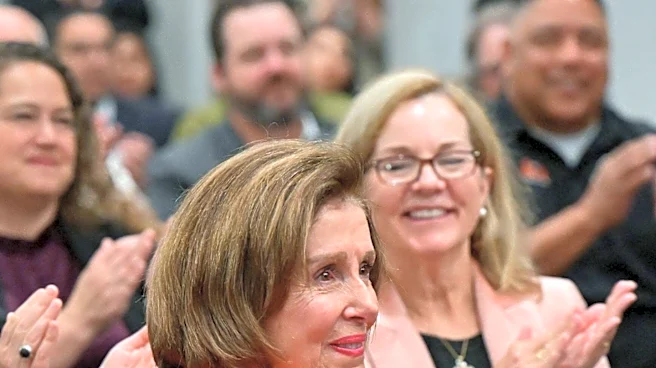
Speaker Emerita Nancy Pelosi delivered remarks on the House Floor, paying tribute to the life and legacy of Gloria Steinem, a prominent champion for equality. Pelosi's address followed Steinem's memorial service, where she highlighted Steinem's significant
contributions to women's rights and political empowerment. Pelosi specifically credited Steinem with inspiring numerous women to pursue political office, noting a substantial increase in Democratic women in Congress from twelve to nearly 120 during her tenure. During her remarks, Pelosi urged the House to honor Steinem's enduring legacy by prioritizing the passage of the Equal Rights Amendment (ERA) early in the upcoming congressional session. She emphasized Steinem's role in founding the National Women's Political Caucus, an organization dedicated to increasing the representation of women in elected positions. The memorial service itself was described as a celebration of life, attended by notable figures including three former First Ladies: Michelle Obama, Jill Biden, and Hillary Clinton.
Why It's Important?
Pelosi's call for the swift passage of the Equal Rights Amendment underscores its continued relevance in contemporary U.S. politics and women's rights advocacy. The ERA, which aims to guarantee equal legal rights for all American citizens regardless of sex, has been a subject of debate and legislative effort for decades. Its passage would represent a significant legal and symbolic victory for gender equality, potentially impacting various aspects of law and public policy, from employment and pay equity to protections against discrimination. By linking the ERA's passage directly to Gloria Steinem's legacy, Pelosi frames it as a crucial step in fulfilling the vision of a pioneering feminist leader. This move could galvanize support among women's rights organizations and progressive lawmakers, placing renewed pressure on Congress to act. The increased representation of women in Congress, which Pelosi attributed in part to Steinem's influence, highlights a broader shift in the political landscape, demonstrating the growing power and voice of women in national decision-making.
What's Next?
The immediate next step following Pelosi's remarks would be for legislative leaders to introduce or reintroduce the Equal Rights Amendment for consideration in the next Congress. Pelosi's explicit call for early action suggests an intent to make the ERA a priority on the legislative agenda. This could lead to renewed debates and votes in both the House and Senate. Advocacy groups and women's rights organizations are likely to intensify their lobbying efforts to build bipartisan support for the amendment. The political climate and the composition of the next Congress will significantly influence the ERA's chances of passage. Should it pass both chambers, the ratification process by individual states would follow, which has historically been a complex and protracted endeavor. The discussion around the ERA could also reignite broader conversations about gender equality, reproductive rights, and women's representation in leadership roles across various sectors.
Beyond the Headlines
Pelosi's tribute to Gloria Steinem and her renewed push for the ERA extend beyond immediate legislative goals, touching upon deeper cultural and historical narratives. Steinem's influence represents a pivotal era in the feminist movement, and honoring her legacy through legislative action reinforces the ongoing struggle for gender equality. The mention of the significant increase in Democratic women in Congress, from a mere twelve to nearly 120, illustrates a profound demographic and ideological shift within U.S. political institutions. This transformation reflects decades of activism and changing societal attitudes towards women in leadership. The ERA, if passed, could serve as a foundational legal principle, potentially influencing future court decisions and policy interpretations related to gender. Furthermore, the event highlights the enduring power of symbolic gestures in politics, where honoring past figures can mobilize contemporary movements and shape future policy directions, reinforcing the idea that historical struggles for rights continue to inform present-day political agendas.