
What's Happening?
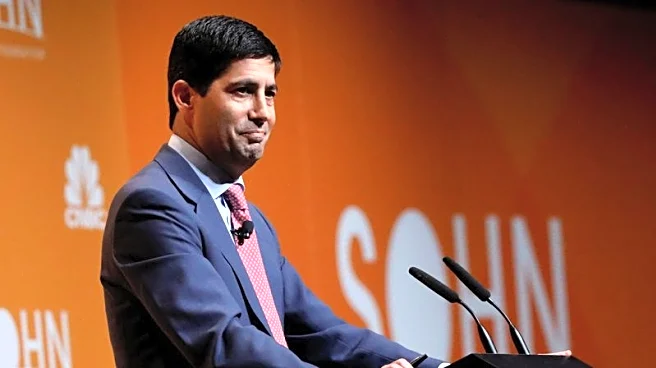
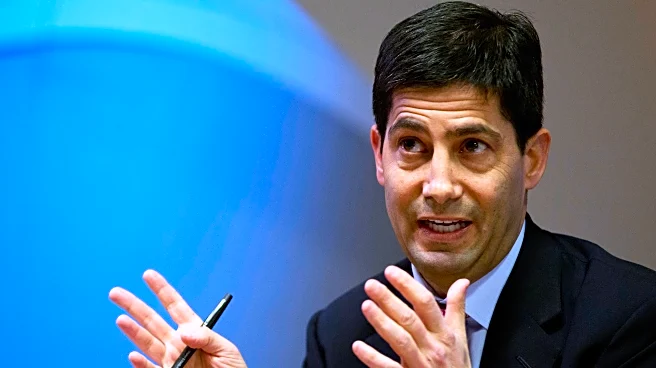
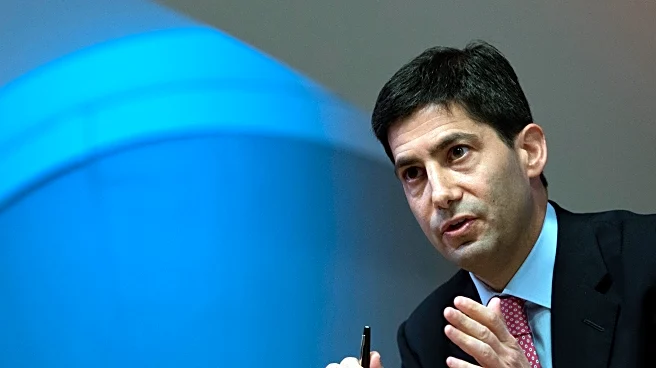
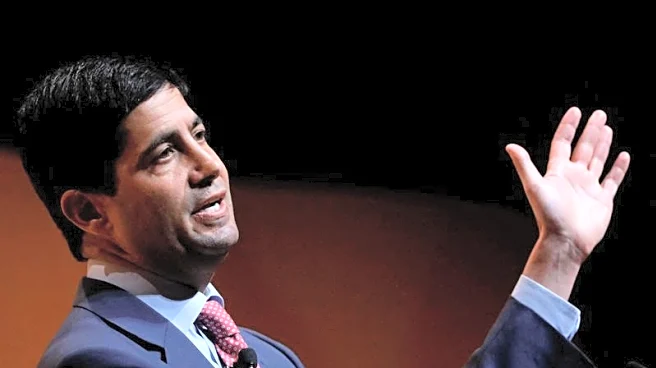
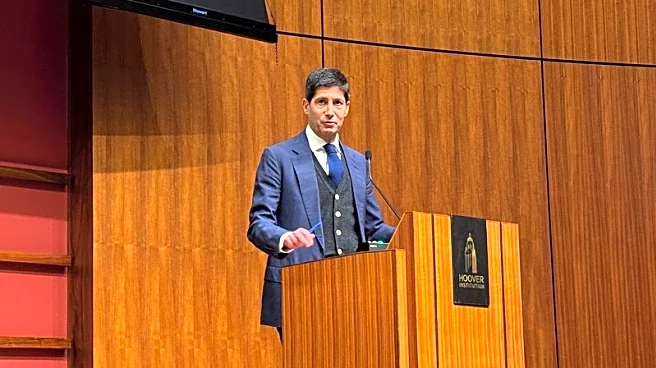
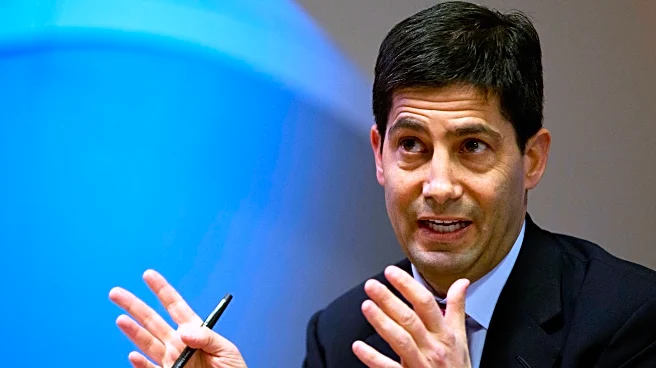
President Trump is expected to nominate Kevin Warsh, a former Federal Reserve governor, as the next chair of the Federal Reserve. This move comes as Trump seeks to exert more influence over the central bank, which has traditionally operated with a high
degree of independence. Warsh, who served as a Fed governor from 2006 to 2011, is known for his critical stance on the Fed's monetary policies post-financial crisis. His nomination is seen as part of Trump's broader strategy to push for lower interest rates, a stance that has put him at odds with the current Fed chair, Jerome Powell. Powell, appointed by Trump in 2018, has resisted the president's calls for rate cuts, maintaining a cautious approach to monetary policy. The nomination of Warsh, who aligns more closely with Trump's economic views, signals a potential shift in the Fed's future policy direction.
Why It's Important?
The nomination of Kevin Warsh as Fed chair is significant as it could alter the trajectory of U.S. monetary policy. Warsh's alignment with Trump's preference for lower interest rates could lead to changes that might stimulate economic activity but also risk inflation. The independence of the Federal Reserve is a cornerstone of U.S. economic stability, allowing it to make decisions based on long-term economic health rather than short-term political pressures. Trump's attempts to influence the Fed have raised concerns among economists and business leaders about the potential erosion of this independence. The outcome of Warsh's nomination could impact investor confidence and the broader U.S. economy, as the Fed's policies play a crucial role in managing economic growth and inflation.
What's Next?
If Warsh is confirmed by the Senate, he will replace Jerome Powell as Fed chair. This transition could lead to a shift in the Fed's approach to interest rates and monetary policy. The Senate's response to Warsh's nomination will be closely watched, as some lawmakers have expressed concerns about maintaining the Fed's independence. The confirmation process will likely involve scrutiny of Warsh's past views and his potential alignment with Trump's economic agenda. Additionally, the ongoing investigation into Powell by the Department of Justice, initiated by Trump, adds another layer of complexity to the situation. The outcome of these developments will have significant implications for the U.S. economy and the Fed's role in it.