





What's Happening?
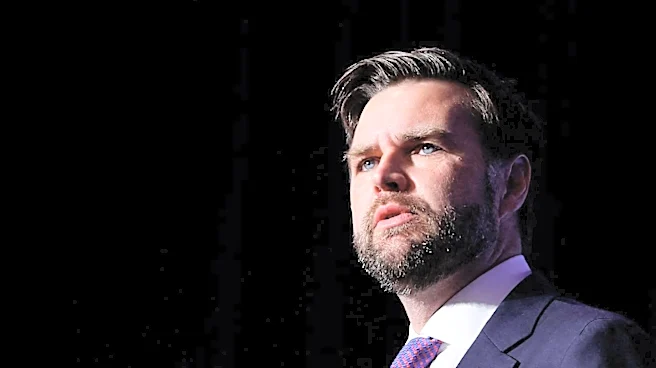
Vice President JD Vance recently made headlines with a controversial remark on social media platform X, where he responded to a comment about the high cost of burritos. The exchange began when Andrew Kolvet of Turning Point USA mentioned a student's complaint
about a $20 burrito. Washington Post columnist Marc Thiessen replied dismissively, prompting Vance to retort with a jab at Thiessen's weight. This interaction has been interpreted by some as 'fat-shaming,' but others see it as Vance's strategic use of social media to highlight issues of affordability and war. Vance, known for his fluency in social media, has been using these platforms as a modern 'bully pulpit' to engage with both supporters and critics. His approach reflects a generational shift in political communication, leveraging technology to address pressing issues faced by working-class and young Americans.
Why It's Important?
The incident underscores the growing role of social media in political discourse, particularly among younger politicians like Vance who are adept at using these platforms to connect with constituents. By addressing affordability and war, Vance taps into significant concerns among Americans, especially those living paycheck-to-paycheck and young people worried about their future prospects. His comments also highlight a divide within the Republican Party on issues like economic policy and foreign intervention. Vance's approach may resonate with voters who feel neglected by traditional political rhetoric, potentially influencing future electoral outcomes. The use of social media as a tool for political engagement reflects broader changes in how politicians communicate and the issues they prioritize.
What's Next?
As Vance continues to use social media to address key issues, it is likely that his approach will influence other politicians to adopt similar strategies. The focus on affordability and war could prompt further debate within the Republican Party, especially as the 2026 elections approach. Vance's comments may also lead to increased scrutiny of U.S. foreign policy and economic strategies, potentially impacting legislative priorities. Observers will be watching to see how Vance's use of social media evolves and whether it will lead to tangible policy changes or shifts in public opinion.
Beyond the Headlines
Vance's use of humor and social media to address serious issues raises questions about the role of digital platforms in shaping political narratives. It also highlights the potential for social media to democratize political discourse, allowing voices from diverse backgrounds to participate in national conversations. However, this approach also risks oversimplifying complex issues and reducing them to soundbites. The ethical implications of using personal attacks or humor in political discourse are also worth considering, as they can influence public perceptions and the tone of political engagement.