
What's Happening?
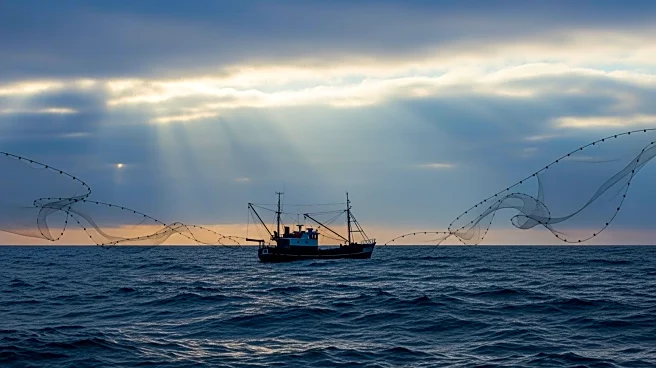
A Chinese fishing vessel, Liao Dong Yu 578, has reportedly been hijacked off the coast of Puntland, Somalia. This incident marks the second time the vessel has been captured by pirates in the same region,
with the first hijacking occurring in November 2024. The vessel was released in January 2025 after a ransom payment of approximately $2 million. The hijacking was reported by maritime security consultancy Vanguard Tech, although it has not been confirmed by EUNAVFOR, the naval protection mission. The Liao Dong Yu fleet is notorious for illegal fishing activities, particularly targeting the yellowfin tuna fishery off the Somali coast. This illegal, unreported, and unregulated (IUU) fishing is a significant issue, costing Somalia $300 million annually and threatening the livelihoods of up to 90,000 artisanal fishermen.
Why It's Important?
The hijacking of the Liao Dong Yu 578 highlights ongoing challenges in maritime security and illegal fishing practices in the region. The persistent IUU fishing by foreign fleets, including those from China, poses a severe threat to Somalia's economy and food security. The depletion of yellowfin tuna stocks could have devastating effects on local communities reliant on fishing for their livelihoods. This situation underscores the need for stronger international cooperation and enforcement of maritime laws to protect vulnerable fisheries and support sustainable economic development in Somalia.
What's Next?
The hijacking incident may prompt increased international attention and efforts to address illegal fishing and piracy in the region. Stakeholders, including local authorities in Puntland and international maritime organizations, may need to collaborate more effectively to enhance security measures and enforce fishing regulations. Additionally, there could be calls for more robust monitoring and reporting mechanisms to prevent future incidents and protect the region's marine resources.
Beyond the Headlines
The situation also raises broader ethical and environmental concerns about the impact of illegal fishing on global fish stocks and marine ecosystems. The exploitation of vulnerable fisheries by foreign fleets not only threatens local economies but also contributes to the degradation of marine biodiversity. This incident could serve as a catalyst for renewed discussions on sustainable fishing practices and the importance of preserving marine environments for future generations.