


What's Happening?
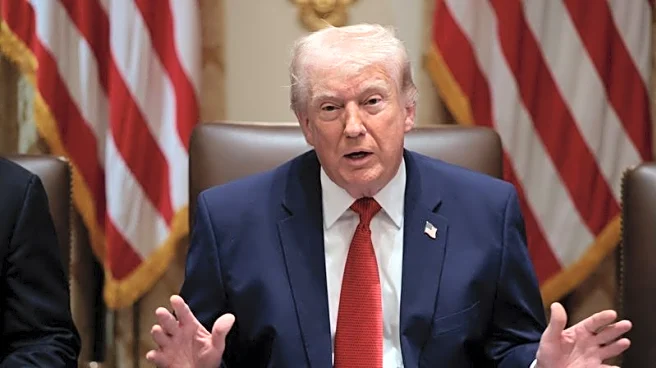
President Trump has delayed potential military strikes on Iran's energy infrastructure, citing progress in negotiations and the release of oil tankers from the Strait of Hormuz. The delay follows Iran's 'gift' of allowing eight oil tankers to transit
the Strait, which Trump views as a sign of good faith in ongoing talks. The negotiations involve multiple parties, including Pakistan, which is acting as an intermediary. The situation remains fluid, with mixed messages from Iran and ongoing discussions about a U.S. 15-point plan.
Why It's Important?
The decision to delay military action highlights the complex geopolitical dynamics surrounding the Strait of Hormuz, a critical passage for global oil shipments. The negotiations and tanker movements are crucial for maintaining stability in the region and preventing disruptions in the global oil supply. President Trump's approach reflects a strategic balancing act between military threats and diplomatic engagement. The outcome of these negotiations could have significant implications for U.S.-Iran relations and broader Middle Eastern geopolitics.
What's Next?
The new deadline for potential military action is set for April 6, providing a window for further diplomatic efforts. The U.S. and its allies will likely continue to engage with Iranian officials to secure a peaceful resolution. The situation may also prompt other countries to reassess their strategies in the region, potentially leading to new alliances or shifts in policy. The international community will be watching closely for any developments that could impact regional stability and global energy markets.