






What's Happening?
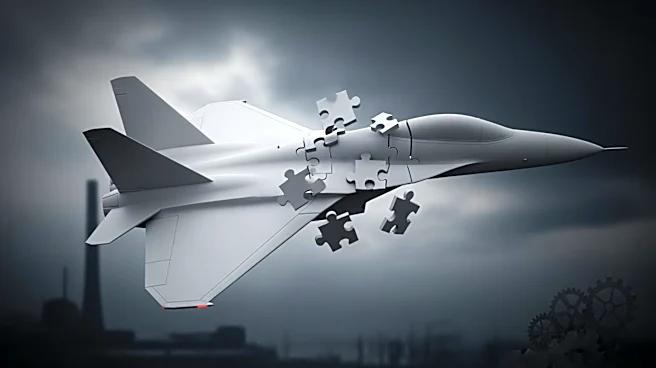
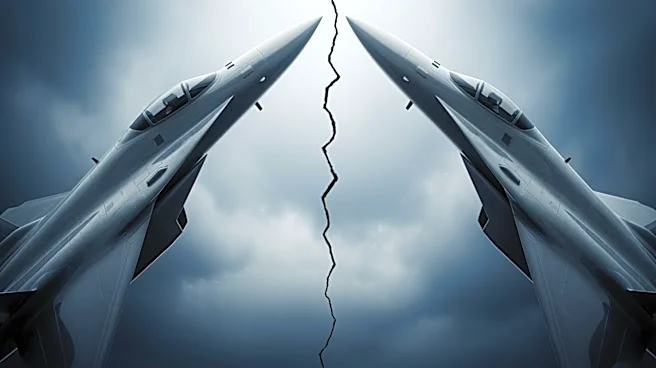
Germany and France have decided to terminate their joint effort to develop a new-generation fighter jet, known as the Future Combat Air System (FCAS). This decision comes after eight years of collaboration between Airbus and Dassault Aviation, primarily
due to industrial tensions and disagreements over project control. German Defense Minister Boris Pistorius announced that an agreement was unattainable, citing differences in requirements, such as France's need for a carrier-capable fighter and nuclear delivery capabilities, which Germany does not require. Despite the project's collapse, other elements of FCAS, like uncrewed aircraft programs and a combat cloud network, will continue. The decision marks a significant shift in European defense collaboration, although Pistorius emphasized that it would not affect other bilateral cooperation efforts.
Why It's Important?
The dissolution of the FCAS project highlights the challenges of multinational defense collaborations, particularly when industrial and strategic priorities diverge. This development could impact Europe's defense capabilities, especially in light of increasing security concerns from Russia and pressure from the U.S. for Europe to bolster its military strength. The project's failure underscores the difficulties in aligning the defense needs and industrial interests of different countries, potentially affecting future collaborative defense initiatives. The decision also reflects broader issues in European defense policy, where underinvestment has been a longstanding concern.
What's Next?
Germany is now exploring alternative options to address its future fighter needs, with ongoing discussions with various stakeholders. The continuation of other FCAS components suggests a partial salvage of the project, focusing on uncrewed systems and network capabilities. The outcome of these efforts will shape the future of European defense technology and collaboration. Additionally, lessons learned from this experience may influence how future multinational defense projects are structured to avoid similar pitfalls.