





What's Happening?
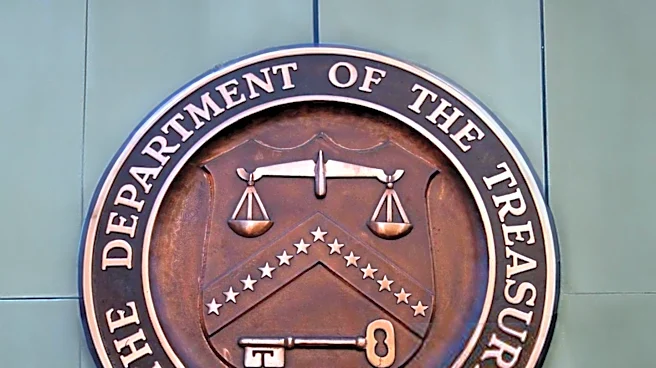
The U.S. Department of the Treasury has released a proposed rule to expand its Outbound Investment Security Program (OISP) to include hypersonic technology. This expansion, directed by the COINS Act, aims to prevent U.S. investments and related support
from aiding countries of concern in developing sensitive national-security technologies. The proposed rule would impose transaction restrictions or new notification requirements for companies involved in producing composites, ceramics, coatings, metals, alloys, and other materials critical for hypersonic systems or components. The OISP targets transactions with specific countries, including China (and its special administrative regions Hong Kong and Macau), Cuba, Iran, North Korea, Russia, and Venezuela under the Nicolás Maduro regime. Affected transactions could include equity investments, certain debt financing, joint ventures, greenfield investments, acquisitions, and specific research and development or technology arrangements. Comments on this proposed rule are due by December 7, 2026.
Why It's Important?
This proposed expansion is significant for U.S. national security and economic policy. By restricting investments in hypersonic technology, the Treasury aims to maintain America's technological advantage and prevent adversaries from acquiring critical capabilities that could pose a threat. The rule directly impacts U.S. companies operating in advanced materials and aerospace sectors, requiring them to scrutinize their foreign investment activities more closely. It also signals a broader U.S. strategy to decouple critical supply chains and technological development from geopolitical rivals. For the targeted countries, this move could hinder their progress in developing advanced military technologies, potentially altering the global balance of power. The rule underscores the U.S. government's commitment to using financial tools as a means of national security, affecting investment flows and international technological collaboration.
What's Next?
The period for public comments on the proposed rule will close on December 7, 2026, during which industry stakeholders, including the American Composites Manufacturers Association (ACMA), are expected to submit feedback. Following this, the Treasury Department will review the comments and may make adjustments before issuing a final rule. Once finalized, U.S. companies engaged in relevant sectors will need to assess their current and future investment portfolios to ensure compliance, potentially leading to divestments or restructuring of international partnerships. The targeted countries may seek alternative sources of investment or accelerate indigenous development efforts, possibly leading to increased R&D spending in those nations. The implementation of this rule could also prompt other allied nations to consider similar measures to safeguard critical technologies.
Beyond the Headlines
This move by the Treasury Department reflects a growing trend of weaponizing economic policy to achieve national security objectives, blurring the lines between finance, technology, and defense. The inclusion of specific materials like composites and ceramics highlights the foundational role of advanced manufacturing in modern warfare and the U.S. government's intent to control the entire technological ecosystem. This could lead to a more fragmented global technology landscape, where innovation is increasingly siloed along geopolitical lines. Furthermore, it raises questions about the long-term impact on global scientific collaboration and the free flow of knowledge, potentially stifling innovation in areas with dual-use applications. The policy also implicitly acknowledges the difficulty of controlling intangible transfers of knowledge, making financial restrictions a more tangible lever for control.