


What's Happening?
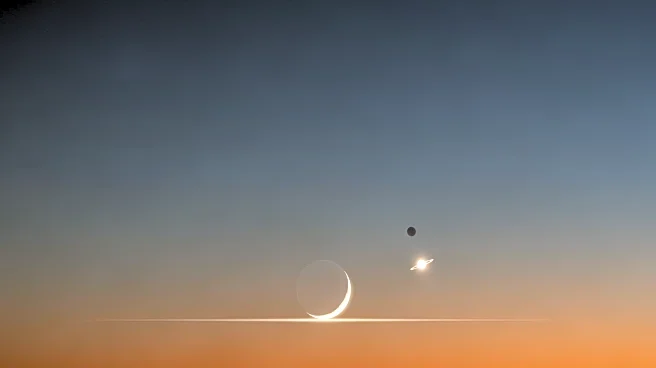
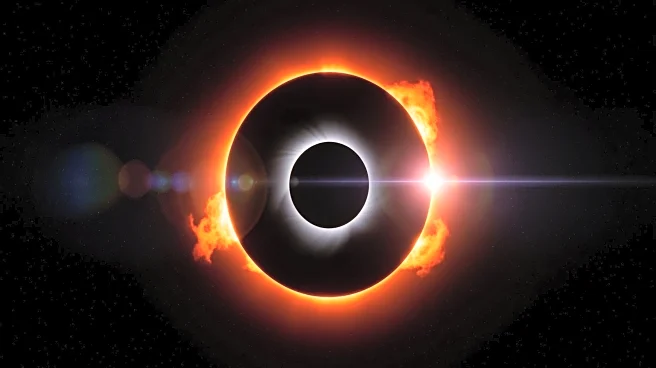
On February 17, 2026, the European Space Agency's Proba-2 satellite captured a stunning annular solar eclipse, known as a 'ring of fire,' from its orbit. This celestial event occurs when the moon passes between the Earth and the sun while at a distance
that makes it appear smaller, leaving a bright ring of sunlight visible around the moon. The satellite was able to observe this phenomenon four times during its orbit, providing a unique perspective that was not visible to most people on Earth. The full annular phase was only visible from remote locations in Antarctica, while observers in parts of Chile, Argentina, and southern Africa saw a partial eclipse.
Why It's Important?
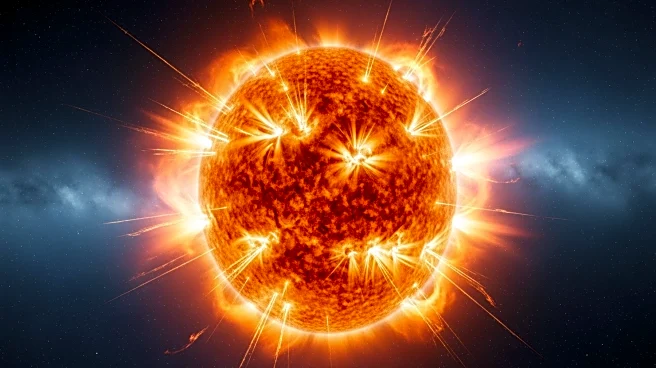
The capture of the 'ring of fire' eclipse by Proba-2 is significant as it provides valuable data and imagery that can enhance our understanding of solar phenomena. Such observations are crucial for studying the sun's corona, the outermost layer of its atmosphere, which can have implications for space weather research. This data is vital for predicting solar storms that can affect satellite operations, communications, and power grids on Earth. The event also highlights the capabilities of space-based observation platforms in providing insights that are not possible from ground-based observations.
What's Next?
Future solar eclipses will continue to be monitored by satellites like Proba-2, contributing to ongoing research in solar physics and space weather. The data collected can help improve predictive models for solar activity, which is essential for preparing for potential impacts on Earth's technological infrastructure. Additionally, these observations may inspire further advancements in satellite technology and observational techniques.