





What's Happening?
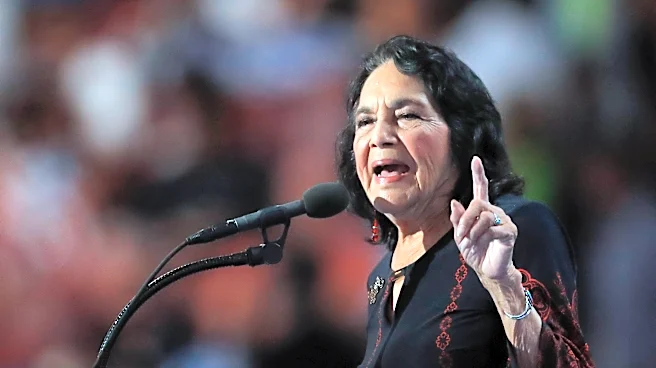
Dolores Huerta, co-founder of the United Farm Workers union, influential labor leader, feminist, and civil rights icon, has died at the age of 96. Her family confirmed her passing on Wednesday. Huerta was renowned for coining the rallying cry "Sí, se
puede!" (Yes, it can be done!) and dedicated her life to improving working conditions for farmworkers. She maintained an active schedule well into her 90s, participating in protests and speaking on issues of race, poverty, LGBTQ+ rights, and women's rights through her Bakersfield, California-based foundation. Her extensive work earned her numerous accolades, including the Presidential Medal of Freedom, presented by President Barack Obama in 2012. Huerta's legacy includes negotiating collective bargaining agreements, winning health and benefit plans for farmworkers, and leading nationwide boycotts of grapes and lettuce, which contributed to the passage of California's first state law recognizing farmworkers' right to collective bargaining.
Why It's Important?
Dolores Huerta's passing marks the end of an era for the U.S. labor and civil rights movements. Her relentless advocacy significantly shaped labor laws and social justice in California and beyond, directly impacting the lives of countless farmworkers and marginalized communities. Her work highlighted the critical importance of collective action and unionization in securing fair wages, safe working conditions, and basic human rights for vulnerable populations. The phrase "Sí, se puede!" transcended the farmworker movement to become a universal symbol of hope and empowerment, influencing political campaigns and social movements across the nation. Her life story underscores the profound impact that dedicated individuals can have on public policy and societal change, demonstrating how grassroots organizing can lead to significant legislative and social reforms, and inspiring generations of activists to fight for justice.
What's Next?
Huerta's legacy is expected to continue inspiring future generations of activists and organizers. Her foundation remains active, continuing to advocate for the rights of workers, women, and marginalized communities. The principles she championed—community organizing, collective bargaining, and fighting injustice—will likely remain central to ongoing labor and civil rights struggles in the U.S. Her emphasis on giving children "an inheritance of justice" rather than material wealth suggests a continued focus on instilling values of social responsibility and activism. While her physical presence is gone, her influence will persist through the movements she helped build, the laws she helped enact, and the countless individuals she empowered to demand change. The challenges she addressed, such as workers' rights, immigration, and social equity, remain pertinent issues in contemporary American society, ensuring her work's enduring relevance.
Beyond the Headlines
Beyond her public achievements, Huerta's life reveals the complex personal sacrifices and challenges faced by civil rights leaders. Her decision to keep silent for 60 years about the sexual abuse by César Chavez, fearing it would compromise her life's work, sheds light on the immense pressures and difficult choices individuals in leadership roles often confront. This revelation adds a layer of human complexity to her iconic status, highlighting the personal toll of public service and the societal dynamics that can silence victims, even within movements dedicated to justice. Her story also underscores the intersectionality of various struggles—labor rights, civil rights, and women's rights—and how these movements are often intertwined. Huerta's journey from a frustrated elementary school teacher to a national icon exemplifies the transformative power of empathy and the conviction that one can do more by organizing for systemic change than by addressing individual symptoms of injustice.