
What's Happening?
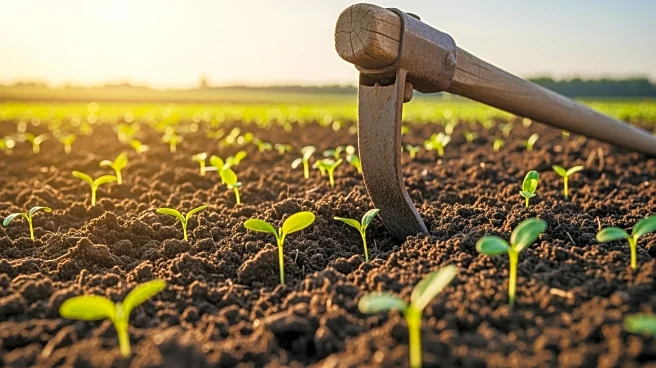
The U.S. Department of Agriculture (USDA) has announced a $700 million investment in regenerative agriculture as part of the Trump administration's 'Make America Healthy Again' agenda. This initiative,
unveiled by Agriculture Secretary Brooke Rollins and Health and Human Services Secretary Robert F. Kennedy Jr., aims to enhance soil health and biodiversity. The funding will be sourced from existing USDA conservation programs, specifically the Environmental Quality Incentives Program and the Conservation Stewardship Program. The initiative is designed to provide farmers with alternatives to chemical and fertilizer inputs, promoting a transition to practices that prioritize soil health. The USDA plans to engage corporate partners to support this program, leveraging a 2022 law that allows private contributions to conservation efforts.
Why It's Important?
This initiative represents a significant shift in U.S. agricultural policy, emphasizing sustainable farming practices that could lead to long-term environmental benefits. By improving soil health, the program aims to ensure the future viability of American farmland, which is crucial for maintaining the country's agricultural productivity. The move also aligns with broader efforts to reduce dependency on chemical inputs, which have been linked to environmental degradation. For farmers, this program offers financial and technical support to adopt more sustainable practices, potentially leading to increased productivity and reduced costs in the long run. Additionally, the involvement of corporate partners could enhance the program's reach and effectiveness, fostering a more collaborative approach to agricultural sustainability.
What's Next?
The USDA will begin implementing the pilot program, with funding allocated to support farmers in transitioning to regenerative practices. The agency will also work on establishing partnerships with corporate entities to further bolster the initiative. Meanwhile, the administration has approved waivers for six additional states to restrict the use of Supplemental Nutrition Assistance Program (SNAP) benefits for purchasing non-nutritious items, a move aimed at promoting healthier food choices. These developments suggest a continued focus on health and sustainability in U.S. agricultural and food policy, with potential implications for farmers, consumers, and the broader food industry.