
What's Happening?
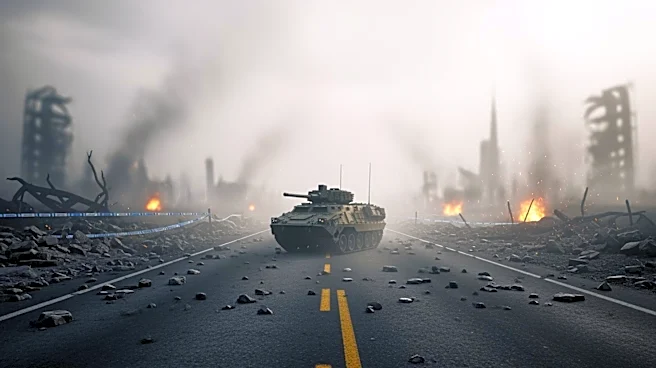
Common Article 3 of the Geneva Conventions provides essential humanitarian protections in non-international armed conflicts. It applies when violence escalates beyond mere disorder to involve state forces
and organized armed groups, or between such groups. The article, included in all four Geneva Conventions of 1949, establishes a minimum humanitarian standard without granting political recognition to non-state parties. It prohibits murder, torture, and other inhumane treatments, ensuring protection for civilians, detainees, and those hors de combat. The rule applies regardless of formal declarations of war or recognition of insurgents, focusing instead on the intensity of violence and organization of the parties involved.
Why It's Important?
The significance of Common Article 3 lies in its ability to impose international humanitarian obligations on internal conflicts, traditionally seen as domestic matters. By setting a minimum standard, it ensures that individuals caught in such conflicts receive protection, regardless of the conflict's classification. This is crucial in modern conflicts, which often involve fragmented groups and shifting alliances. The article's provisions are reinforced by customary international humanitarian law and international criminal law, which can hold individuals accountable for serious violations. This framework helps prevent abuses and ensures that humanitarian principles are upheld even in the most challenging conflict scenarios.