







What's Happening?
A top NATO commander, Air Chief Marshal Sir John Stringer, has announced that the era of large, centralized air operation centers is coming to an end due to increasing threats from adversaries like China and Russia. These centralized command centers,
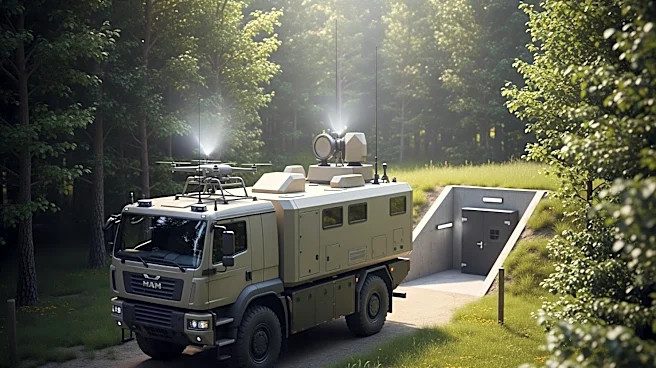
which have been a staple of Western military strategy since the Gulf War, are becoming vulnerable targets due to advancements in missile and drone technology. Stringer emphasized the need for NATO to adopt more mobile, redundant, and survivable command and control systems. This shift is necessary to adapt to the modern battlefield, where adversaries possess the capability to target large, fixed bases. NATO is already testing distributed command functions to enhance operational resilience.
Why It's Important?
The shift away from centralized command centers is significant as it reflects a broader strategic adaptation to modern warfare threats. By dispersing command functions, NATO aims to mitigate the risk of having its operations crippled by targeted attacks on large bases. This change is crucial for maintaining operational effectiveness in the face of sophisticated adversaries. The move also underscores the importance of investing in modern communication and information systems to support distributed operations. This strategic pivot could influence defense policies and military investments across NATO member states, potentially leading to increased defense spending and innovation in military technology.
What's Next?
NATO will likely continue to test and refine its distributed command and control strategies through exercises and simulations. Member states may need to increase their investments in mobile and resilient communication systems to support this new approach. Additionally, there could be a push for greater collaboration among NATO allies to share best practices and technologies that enhance operational flexibility. The shift may also prompt a reevaluation of military infrastructure, with a focus on developing smaller, more agile bases that can support dispersed operations.