




What's Happening?
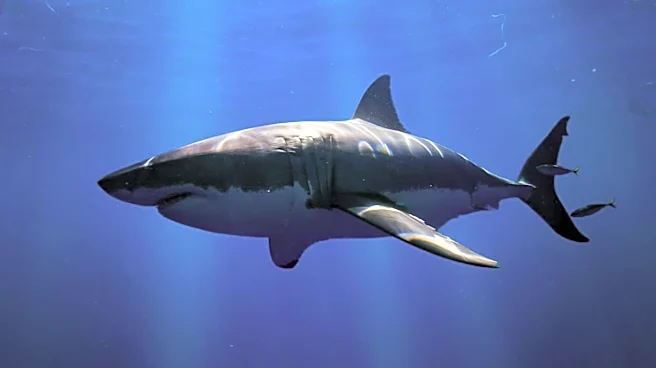
Cape Cod, Massachusetts, has become a significant seasonal hotspot for great white sharks due to a resurgent gray seal population, which serves as their primary food source. This increase in shark presence has led to noticeable changes in local behavior
and the tourism industry. While the overall enthusiasm for Cape Cod as a destination remains high, with the tourist economy growing to nearly $2.8 billion, beachgoers are adapting their habits. Many now use shark-tracking apps like Sharktivity, and there's a growing demand for private swimming pools, with some builders even advertising 'shark-free swimming.' Shark-spotting tours have also become popular, offering visitors the chance to observe these apex predators in their natural habitat. This phenomenon is a conservation success story, stemming from the Marine Mammal Protection Act of 1972, which helped the gray seal population recover from near extinction. However, it has also led to increased beach closures and, in some rare instances, shark encounters, including a fatal attack in 2018, the first in Massachusetts waters since 1936.
Why It's Important?
The return of great white sharks to Cape Cod highlights the complex interplay between conservation efforts, ecosystem recovery, and human activity. The Marine Mammal Protection Act's success in restoring the gray seal population has, in turn, revitalized the shark population, demonstrating the far-reaching effects of environmental legislation. This shift has created a unique challenge for local communities, balancing ecological success with public safety and economic interests. The rise of shark tourism and the adaptation of local businesses, such as the increased demand for swimming pools, illustrate how industries can evolve in response to environmental changes. The situation also underscores the importance of public awareness and education regarding marine wildlife, as residents and tourists learn to coexist with a thriving predator population. The economic growth despite the shark presence suggests a resilient tourism sector capable of adapting to new environmental realities, potentially serving as a model for other regions facing similar ecological shifts.
What's Next?
Cape Cod is expected to continue adapting to the increased presence of great white sharks. Local authorities and organizations, such as the Atlantic White Shark Conservancy, will likely further develop and implement strategies for public safety, including enhanced shark monitoring, warning systems, and educational campaigns. The demand for shark-related tourism, including shark-spotting charters, is anticipated to grow, potentially leading to further development in this niche market. Businesses will continue to innovate, offering services and products that cater to both the desire for ocean recreation and the need for safety. Research into shark behavior and population dynamics will also remain crucial to inform management strategies and ensure the long-term health of both the marine ecosystem and the local community. The ongoing balance between conservation, tourism, and public safety will be a continuous process of adaptation and learning for the region.
Beyond the Headlines
The situation in Cape Cod extends beyond immediate safety concerns and economic adjustments, touching upon deeper societal and cultural shifts. The increased visibility of great white sharks challenges traditional perceptions of the ocean as solely a recreational space, re-emphasizing its role as a wild ecosystem. This forces a re-evaluation of human-wildlife coexistence, particularly with apex predators. The phenomenon also highlights the ethical considerations of ecotourism, where the desire to observe wildlife must be balanced with minimizing disturbance to the animals and ensuring human safety. Culturally, the presence of sharks has become an integral part of Cape Cod's identity, influencing local art, merchandise, and even the collective consciousness, as evidenced by the 'Respect the Locals' bumper stickers. This ongoing narrative reflects a broader societal trend of reconnecting with nature and understanding the intricate balance of ecosystems, even when it introduces new challenges.