




What's Happening?
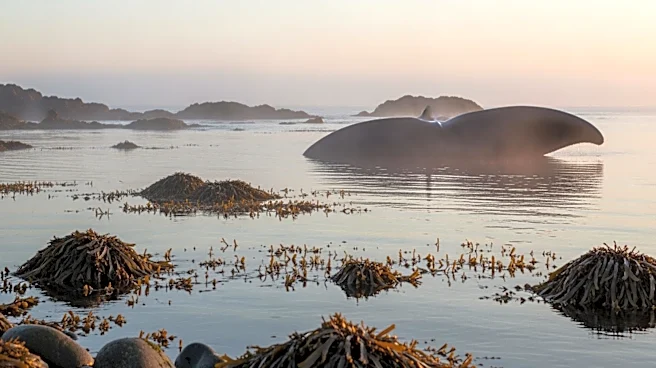
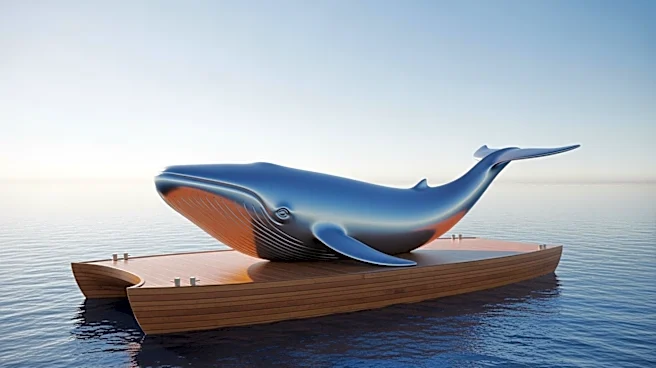
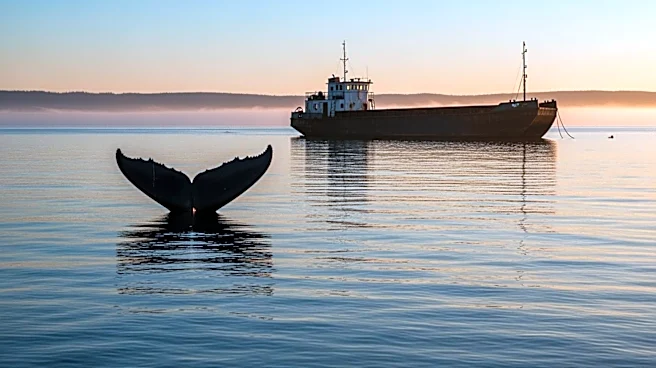
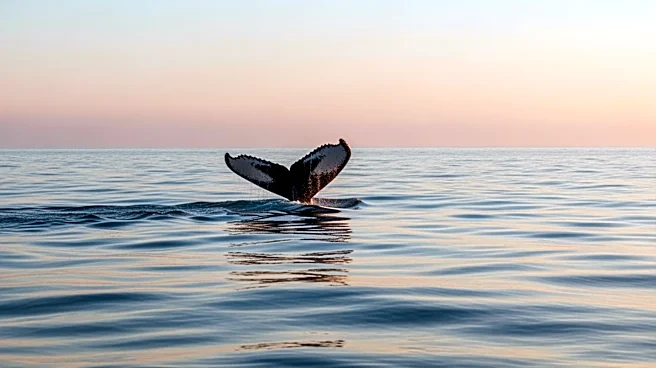
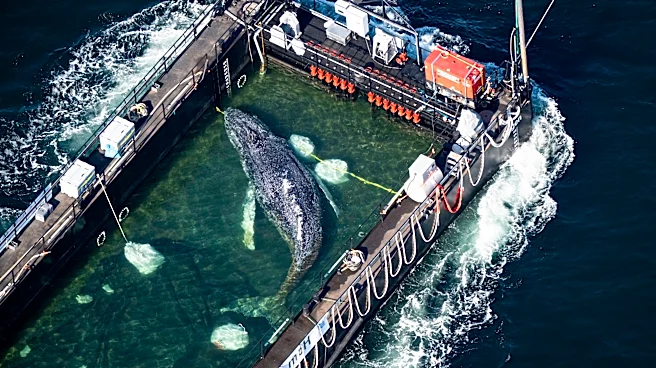
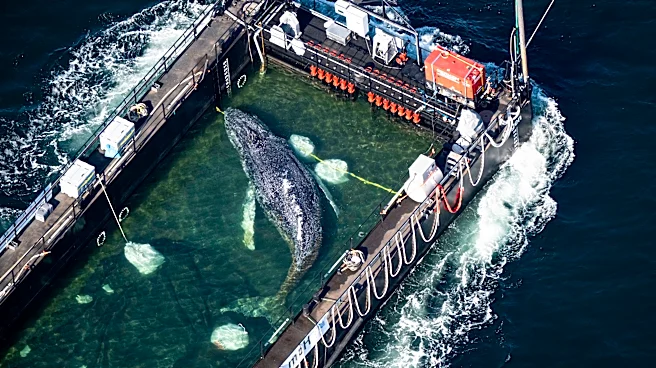
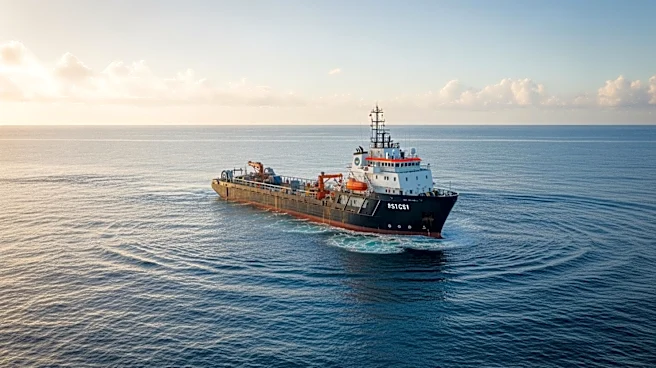
A humpback whale, nicknamed 'Timmy', stranded near Germany's Baltic Sea coast, is being transported to the North Sea on a barge. The whale's health had deteriorated after being repeatedly stranded in shallow waters. Rescuers used a flooded barge to move
the whale, and the journey is now underway, passing through Danish waters. The operation, unprecedented in Germany, aims to return the whale to its natural habitat, despite concerns about the stress on the animal.
Why It's Important?
This rescue operation underscores the challenges and ethical considerations in wildlife conservation efforts. The decision to transport the whale reflects a commitment to preserving marine life, despite the risks involved. The operation has sparked debate among scientists and activists about the best course of action for stranded animals, highlighting the complexities of human intervention in natural processes. The successful transport of Timmy could set a precedent for future wildlife rescue operations.
Beyond the Headlines
The case of Timmy raises questions about human responsibility in wildlife conservation and the impact of environmental changes on marine life. The operation's success or failure could influence future policies and strategies for dealing with similar situations. It also highlights the role of public and private initiatives in conservation efforts, as well as the need for collaboration between different stakeholders to address environmental challenges.