




What's Happening?
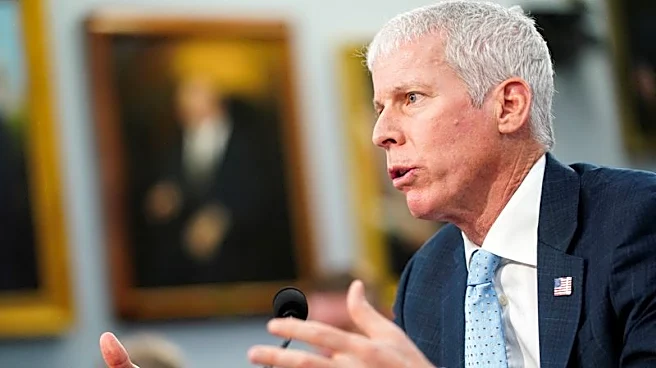
U.S. Rep. Chip Roy, R-Austin, has lauded the recent lifting of federal restrictions on certain short-barrel firearms and silencers in Texas, following a judge's order that took effect. This development stems from a lawsuit initiated by firearms trade
groups, gun businesses, and a San Angelo gun owner, later joined by Texas and 14 other Republican-led states. The lawsuit challenged parts of the National Firearms Act (NFA) of 1934, specifically after the 'One Big Beautiful Bill' signed by President Trump in July 2025 eliminated the $200 tax on transferring or making certain firearms, including short-barrel shotguns, short-barrel rifles, and silencers. U.S. District Judge James Wesley Hendrix ruled on August 5 that the NFA's regulations, originally based on Congress's taxing power, could not continue once the tax was revoked. The Department of Justice (DOJ) is currently assessing the impact of this ruling, which applies to the individuals and groups involved in the lawsuit, their customers or members, and state agencies in the 15 participating states. Republican lawmakers, including nine from Texas, had urged U.S. Attorney General Todd Blanche not to appeal the decision.
Why It's Important?
This ruling marks a significant victory for Second Amendment advocates and gun rights groups, who view it as a restoration of constitutional rights. The NFA, enacted in 1934, was a response to high-profile shootings and aimed to curtail certain firearm activities through taxation and registration. The recent judicial decision, by removing these long-standing federal restrictions for specific categories of firearms and silencers, could set a precedent for similar challenges in other states or at a national level. For gun control organizations, this development is a major setback, as they argue that short-barrel rifles, shotguns, and silencers are powerful weapons often used in mass shootings and can hinder law enforcement's ability to respond effectively. The decision highlights the ongoing national debate over gun control and the interpretation of the Second Amendment, with potential implications for public safety and the regulatory landscape of firearms across the U.S. The DOJ's assessment of the ruling's impact will be closely watched, as it could determine the future legal challenges and policy responses.
What's Next?
The Department of Justice is currently assessing the impact of the court's ruling, and it has a 60-day window to decide whether to appeal Judge Hendrix's decision. The outcome of this assessment will be crucial in determining the longevity and broader application of this ruling. Should the DOJ choose not to appeal, or if an appeal is unsuccessful, the precedent set by this decision could encourage similar legal challenges against firearm regulations in other states or at the federal level. Gun rights advocates and Republican lawmakers are likely to continue pushing for further deregulation, while gun control groups will undoubtedly intensify their efforts to advocate for stricter firearm laws and challenge such rulings. The decision could also influence future legislative efforts in Congress regarding gun control, potentially leading to new bills or amendments aimed at either reinforcing or further loosening firearm restrictions. The public and various advocacy groups will be closely monitoring the DOJ's next steps and any subsequent legal or legislative actions.
Beyond the Headlines
The lifting of these federal restrictions delves into the complex interplay between constitutional rights, public safety concerns, and judicial interpretation. The NFA's original intent was to regulate certain firearms through taxation, a power Congress invoked to address public safety issues during a specific historical period. The recent ruling, however, underscores a shift in how these regulations are viewed, particularly when the underlying tax mechanism is removed. This raises deeper questions about the scope of congressional power in regulating firearms and the evolving interpretation of the Second Amendment in modern society. Ethically, the decision reignites the debate about the balance between individual liberties and collective security, especially in the context of gun violence. Culturally, it reflects the persistent divide in American society regarding gun ownership and control, with strong sentiments on both sides. The long-term implications could include a re-evaluation of existing firearm laws, potential changes in gun manufacturing and sales, and a continued legal and political struggle over the future of gun rights in the United States.