




What's Happening?
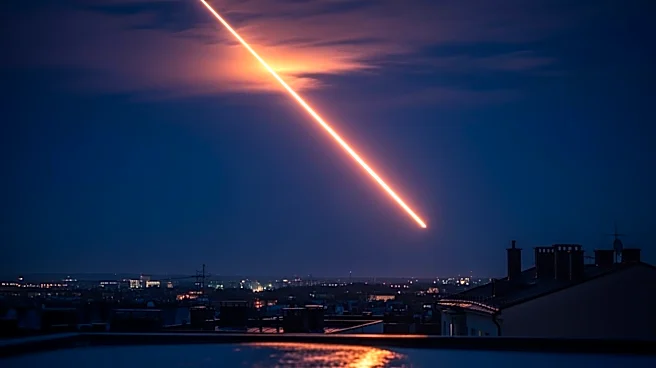
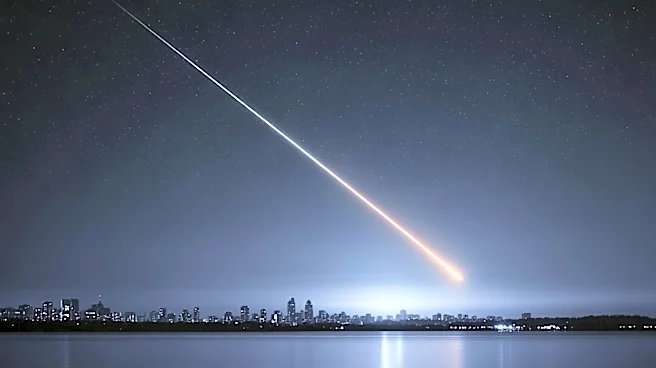
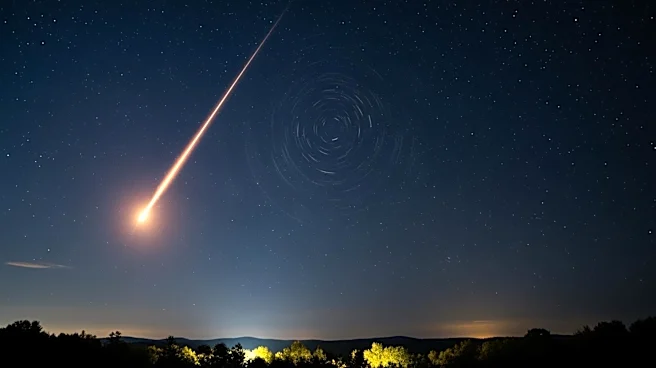
On Saturday, a meteor traveling at approximately 75,000 miles per hour exploded over the northeastern United States, creating a sonic boom that was heard across the region. The event occurred north of Cape Cod Bay and was captured on camera by several
witnesses. Initially mistaken for an earthquake, the United States Geological Survey clarified that the noise was a sonic boom from a suspected bolide. NASA confirmed that the meteor fragmented at an altitude of 40 miles over northeast Massachusetts and southeast New Hampshire, releasing energy equivalent to about 300 tons of TNT. This explosion was not linked to any active meteor shower and was identified as a natural object, not space debris.
Why It's Important?
The meteor explosion highlights the unpredictable nature of space objects entering Earth's atmosphere and the potential impact they can have on populated areas. Such events, while rare, can cause significant concern among residents due to their sudden and loud nature. The incident underscores the importance of monitoring near-Earth objects to better predict and understand their behavior. For scientists and researchers, this event provides valuable data on the dynamics of meteors and their interactions with Earth's atmosphere. It also raises awareness about the need for preparedness in the event of larger or more frequent occurrences.