



What's Happening?
Representatives Janelle Bynum (OR-05), Andrea Salinas (OR-06), and Senators Jeff Merkley and Ron Wyden announced that $16 million in federal funding will be allocated to Marion, Polk, Klamath, and Deschutes counties in Oregon. This funding, sourced from
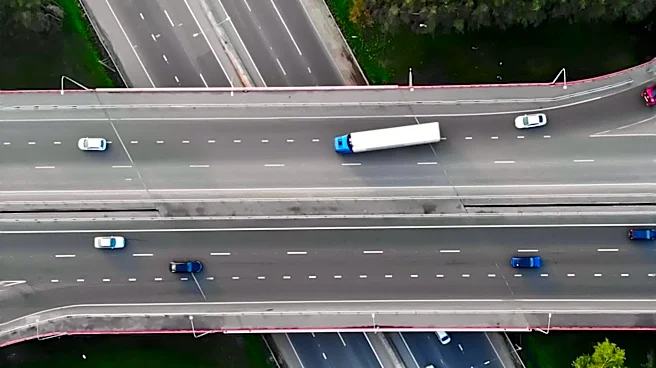
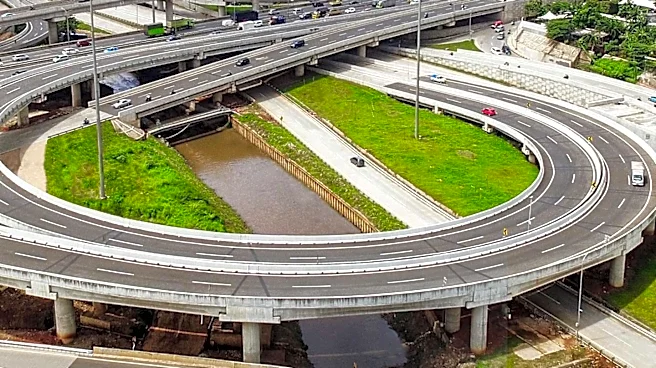
the U.S. Department of Transportation’s Safe Streets and Roads for All (SS4A) program, is designated for the development and updating of comprehensive road and street safety plans. The SS4A program, established under the Bipartisan Infrastructure Law, aims to prevent roadway fatalities and serious injuries for motorists, pedestrians, and bicyclists. Each of the four counties will receive $4 million to implement projects that include crash analysis, high-risk corridor identification, stakeholder coordination, and temporary pilots such as emergency vehicle driver alerts and prehospital blood delivery workflows.
Why It's Important?
This federal investment is critical for enhancing public safety on Oregon's roads, particularly as the state experiences longer nights and worsening weather conditions. Roadway fatalities and serious injuries represent a significant public health and economic burden. By funding comprehensive safety plans, the SS4A program directly addresses these issues, aiming to create safer environments for all road users. The projects will improve emergency response coordination and post-crash care, which can be life-saving in critical moments. This initiative also underscores the importance of federal-local partnerships in addressing infrastructure needs and highlights the tangible benefits of the Bipartisan Infrastructure Law in communities across the nation. The focus on data-driven analysis and pilot programs allows for tailored solutions to specific local challenges, potentially setting new standards for road safety.
What's Next?
The four Oregon counties—Marion, Polk, Klamath, and Deschutes—will now proceed with developing and updating their comprehensive road and street safety plans using the $16 million federal allocation. This will involve detailed safety analyses of high-risk corridors, extensive stakeholder engagement, and the development of new protocols. The implementation of temporary pilot programs, such as emergency vehicle alerts and prehospital blood delivery models, will provide valuable data to inform future safety initiatives. These projects are expected to lead to tangible improvements in roadway infrastructure, emergency response times, and overall safety for motorists, pedestrians, and bicyclists. The success of these programs could also influence future funding decisions and serve as a model for other regions seeking to enhance their road safety measures.
Beyond the Headlines
The allocation of $16 million for street safety in Oregon reflects a broader national commitment to Vision Zero principles, aiming to eliminate traffic fatalities and severe injuries. This initiative goes beyond simple road repairs, focusing on a systemic approach that integrates engineering, education, enforcement, and emergency response. The inclusion of post-crash care demonstration projects, such as prehospital blood delivery, highlights an innovative approach to improving survivability rates, recognizing that safety extends beyond preventing crashes to mitigating their consequences. This holistic strategy acknowledges the complex interplay of factors contributing to road safety and seeks to create a more resilient and responsive transportation system. Furthermore, the emphasis on data interoperability and stakeholder coordination suggests a move towards more integrated and collaborative safety governance, fostering a culture of shared responsibility for road safety across various agencies and community groups.