



What's Happening?
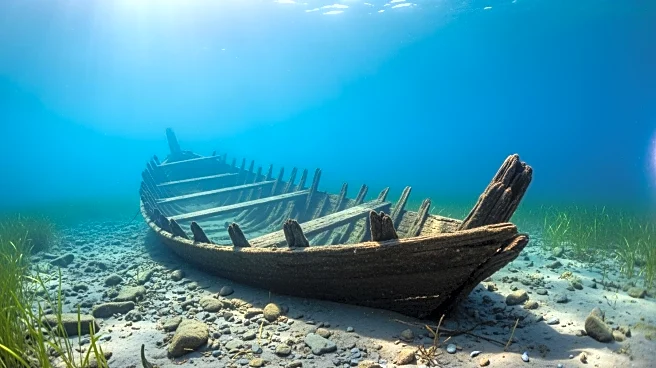
A team led by Illinois shipwreck hunter Paul Ehorn has discovered the wreck of the Lac La Belle, a luxury steamer that sank in a Lake Michigan gale in 1872. The discovery, announced by Shipwreck World, was made about 20 miles offshore between Racine and
Kenosha, Wisconsin. Ehorn, who has been searching for shipwrecks since he was 15, used a clue from fellow wreck hunter Ross Richardson to narrow down the search area. The Lac La Belle, built in 1864, was a 217-foot steamer that sank after a collision in 1866, was raised and reconditioned, and eventually sank again in 1872 during a storm. The ship was carrying 53 passengers and crew, along with a cargo of barley, pork, flour, and whiskey. The wreck's discovery marks the completion of a quest that began almost 60 years ago.
Why It's Important?
The discovery of the Lac La Belle shipwreck is significant for historical and archaeological research, providing insights into 19th-century shipbuilding and maritime history. The Great Lakes are home to thousands of shipwrecks, many of which remain undiscovered. This find highlights the ongoing efforts to locate and preserve these underwater cultural heritage sites. The wreck is covered with quagga mussels, an invasive species that threatens the preservation of such sites, underscoring the urgency of these explorations. For shipwreck hunters like Ehorn, the discovery represents a personal achievement and contributes to the broader understanding of maritime history in the Great Lakes region.
What's Next?
Following the discovery, efforts may focus on documenting and preserving the Lac La Belle wreck. This could involve creating detailed maps and models of the site, potentially leading to further archaeological studies. The presence of invasive species like quagga mussels may prompt discussions on conservation strategies to protect other shipwrecks in the Great Lakes. Additionally, the discovery could inspire renewed interest in shipwreck hunting, encouraging both amateur and professional explorers to continue searching for other lost vessels. The findings may also be shared with museums and educational institutions to enhance public knowledge and appreciation of maritime history.