


What's Happening?
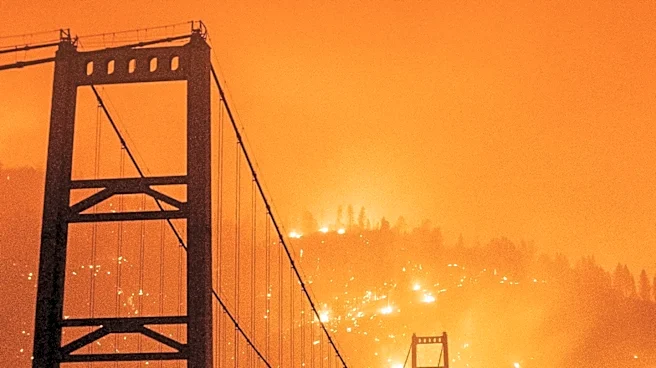
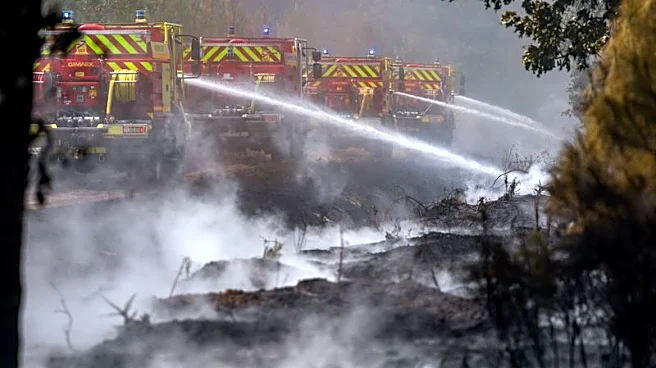
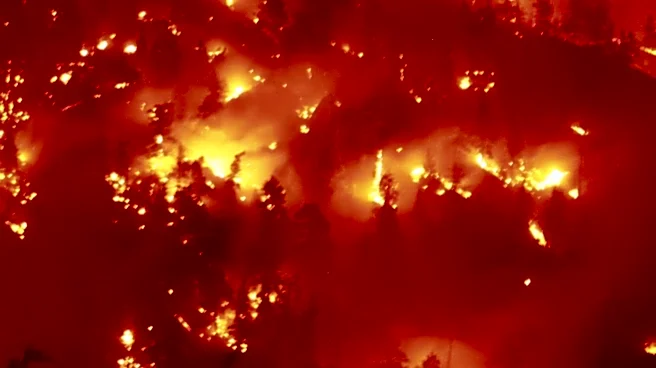
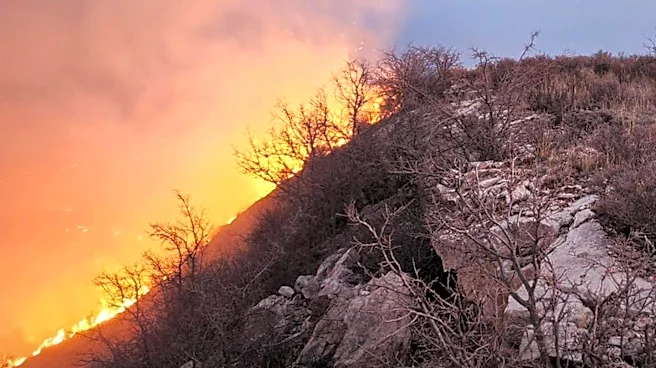
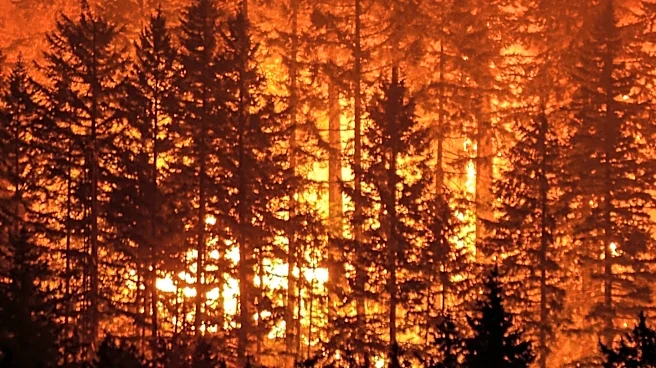
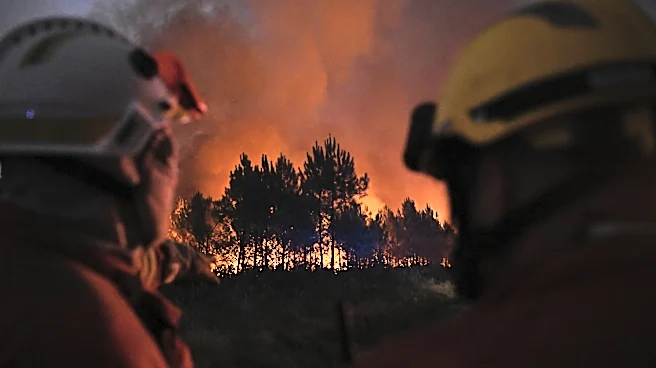
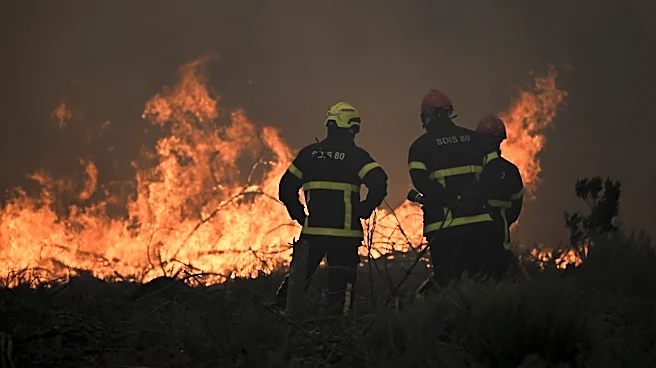
In southwest France, over 220,000 people have been evacuated due to a massive wildfire that has consumed an area four times the size of Paris. The fire, which has been difficult to control, has led to one of the largest evacuations in Europe since World
War II. The situation is compounded by ongoing heatwaves and dry conditions, which have made the fires more intense and challenging to manage. Temporary shelters have been set up in Bordeaux to accommodate evacuees, providing basic necessities and medical care. The fires have also affected Spain, with tens of thousands evacuated there as well.
Why It's Important?
The scale of the evacuations and the intensity of the fires highlight the growing threat of wildfires in Europe, exacerbated by climate change. The situation poses significant challenges for emergency services and highlights the need for improved disaster preparedness and response strategies. The fires have severe implications for public safety, infrastructure, and the environment. They also underscore the importance of addressing climate change to prevent similar disasters in the future. The economic impact of the fires, including the cost of emergency response and damage to property, is likely to be substantial.
What's Next?
Authorities in France and Spain will continue to focus on controlling the fires and ensuring the safety of evacuees. The situation may prompt a reevaluation of current fire management and climate adaptation strategies. There could be increased investment in preventive measures, such as forest management and urban planning, to reduce the risk of future fires. The international community may also call for stronger climate action to address the root causes of such extreme weather events. As the fire season progresses, ongoing monitoring and response efforts will be crucial to mitigate the impact of the fires.