







What's Happening?
The U.S. Postal Service (USPS) is actively increasing its reliance on solar energy as part of its broader sustainability initiatives. During October's Energy Action Month, a federal government program promoting sustainability and efficiency, USPS highlighted
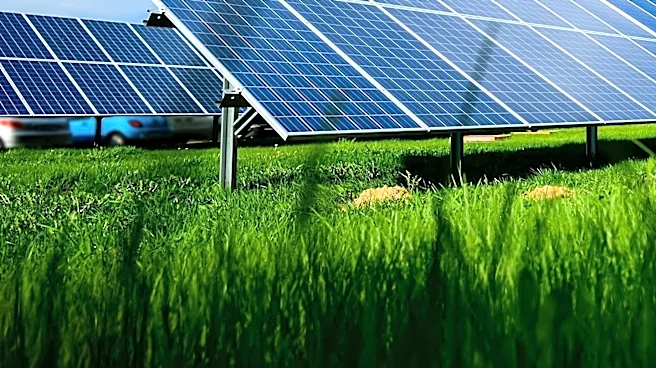
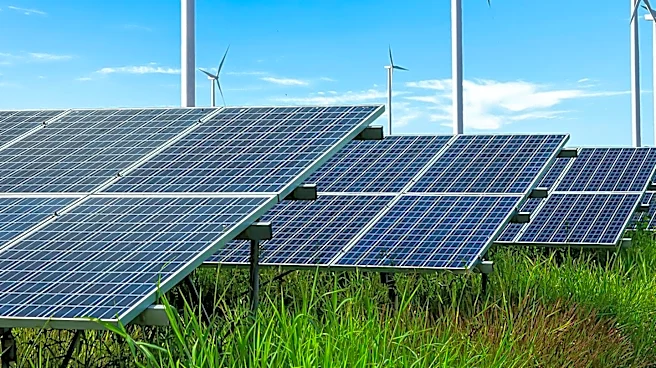
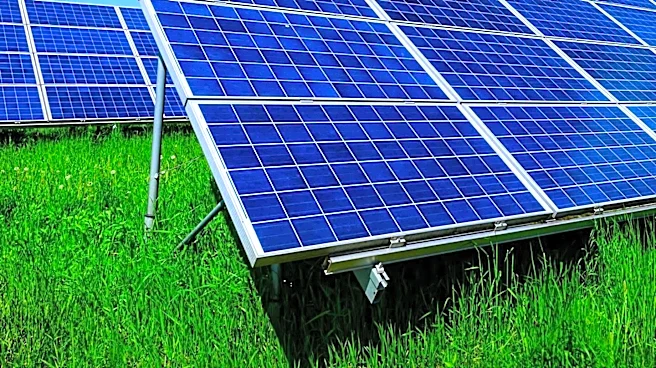
its progress in adopting solar power. The organization utilizes power purchase agreements (PPAs) to acquire solar energy for some of its facilities, which allows third-party providers to own, operate, and maintain the solar generators, thereby avoiding significant upfront costs for USPS. Currently, five USPS facilities—two in California, and one each in Massachusetts, New Jersey, and Washington, D.C.—are powered by these solar PPAs, with plans to implement seven more. This expansion has enabled USPS to surpass its goal of achieving 10 percent renewable energy consumption for fiscal years 2024 and 2025, with renewable sources now accounting for 13.3 percent of its total electricity consumption. The Postal Service aims to reduce its greenhouse gas emissions by 40 percent by fiscal year 2030, using a fiscal year 2021 baseline, through the continued use of solar energy and renewable energy credits.
Why It's Important?
This initiative by the USPS is significant for several reasons. First, as a major federal agency with a vast network of facilities across the U.S., its commitment to renewable energy sets a precedent and demonstrates the feasibility of large-scale adoption of sustainable practices within government operations. The use of PPAs is a crucial financial model that allows organizations to transition to renewable energy without substantial capital investment, making it an attractive option for other public and private entities looking to reduce their carbon footprint. By exceeding its renewable energy consumption goals, USPS showcases that ambitious environmental targets are achievable, potentially inspiring other sectors to accelerate their own sustainability efforts. Furthermore, the reduction of greenhouse gas emissions by a large federal entity directly contributes to national climate goals and can help mitigate the environmental impact of government operations. This move also supports the growth of the renewable energy sector by creating demand for solar power generation and related services.
What's Next?
The USPS plans to expand its solar energy footprint by adding seven more facilities to its power purchase agreement program. This continued expansion will further increase the percentage of renewable energy in its overall consumption and move the organization closer to its goal of a 40 percent reduction in greenhouse gas emissions by fiscal year 2030. The success of the PPA model for USPS could lead to its wider adoption across other federal agencies and government branches, potentially creating a ripple effect in the public sector's transition to clean energy. As the Postal Service continues to highlight its sustainability efforts, it may also influence public perception and encourage individual citizens and businesses to consider renewable energy solutions. The organization's 2026 Impact Report will likely provide further details on its progress and future plans regarding environmental sustainability.
Beyond the Headlines
The USPS's embrace of solar energy through PPAs highlights a broader trend in corporate and governmental sustainability strategies: leveraging innovative financial mechanisms to achieve environmental goals. This approach not only addresses climate change but also offers economic benefits by providing competitively priced electricity and reducing operational costs in the long term. The focus on data centers tripling their electricity consumption by 2030, as noted by ERM's analysis, underscores the urgent need for such initiatives across all sectors, particularly those with high energy demands. The USPS's actions demonstrate a practical pathway for large, established institutions to integrate renewable energy, contributing to grid stabilization and reducing reliance on fossil fuels. This shift also has implications for energy infrastructure development, potentially driving investment in renewable generation and storage solutions, such as the grid-scale battery energy storage facility being developed by Sumitomo Corporation in Japan to support renewable energy adoption.