





What's Happening?
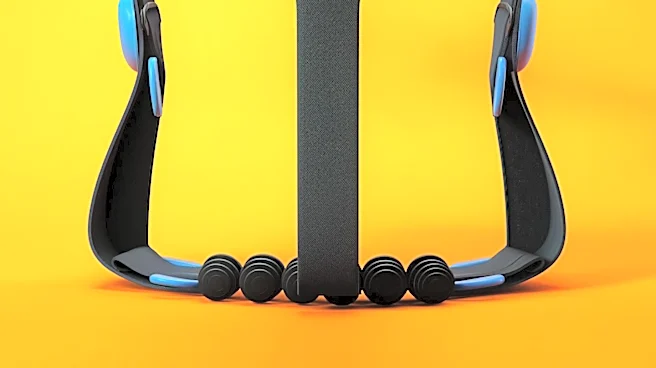
Researchers at the University of Texas at Austin have developed a soft, wearable skin patch called NEUSLeeP designed to enhance rapid eye movement (REM) sleep. A study involving 28 participants demonstrated that the patch helped individuals reach REM sleep 43
minutes faster and extended their time in REM sleep by approximately 16 minutes on average. The device utilizes gentle ultrasound waves and electrodes to stimulate deep brain regions associated with REM sleep. Beyond improving sleep metrics, the study, published in the journal Nature Communications, also indicated an improvement in heart rate variability, a key indicator of a healthy stress response. Brain scans further revealed positive changes in emotional circuits, suggesting additional mood benefits. The patch was found to be effective for both healthy sleepers and those with pre-existing sleep issues, with users reporting it as comfortable and safe, experiencing minimal adverse effects.
Why It's Important?
The development of NEUSLeeP offers a non-invasive and potentially effective new approach to managing stress and improving overall well-being, with significant implications for public health in the U.S. Disrupted REM sleep is strongly linked to various mental health conditions, including anxiety, post-traumatic stress disorder (PTSD), and even an increased risk of Alzheimer's disease. Current treatments for sleep disorders often come with side effects or fail to address underlying issues. This new technology could provide a safer alternative, potentially reducing reliance on medications or less effective interventions like white noise machines, which some research suggests may compromise deep rest. By enhancing REM sleep, the patch could help individuals better cope with daily stressors, leading to improved mood regulation, memory consolidation, and cognitive function, thereby benefiting a broad segment of the U.S. population struggling with sleep-related issues and their mental health consequences.
What's Next?
While initial findings are promising, larger-scale trials are necessary to confirm the study's results and further investigate NEUSLeeP's potential as a treatment for chronic insomnia, PTSD, and depression. Researchers envision a future where patients with mental health disorders can optimize their sleep through this noninvasive and safe treatment, potentially integrating it into broader healthcare strategies. The next steps will likely involve expanding the participant pool, conducting longer-duration studies, and rigorously evaluating its long-term efficacy and safety. If successful, this technology could move towards clinical application, offering a new tool for healthcare providers to address sleep disturbances and their associated mental health challenges, potentially leading to improved quality of life for many Americans.
Beyond the Headlines
This innovation highlights a growing understanding of the intricate connection between sleep architecture, particularly REM sleep, and mental health. The ability to non-invasively modulate brain activity to enhance specific sleep stages opens doors for future research into targeted sleep interventions for a range of neurological and psychological conditions. It also underscores a shift towards personalized and home-based healthcare solutions, empowering individuals to manage their health more actively. The ethical implications of altering brain activity, even subtly, will need careful consideration as such technologies become more prevalent. Furthermore, the success of NEUSLeeP could spur further investment and research into wearable technologies that leverage biofeedback and neurostimulation to address complex health issues, potentially transforming how sleep disorders and stress are managed in the U.S. healthcare system.