



What's Happening?
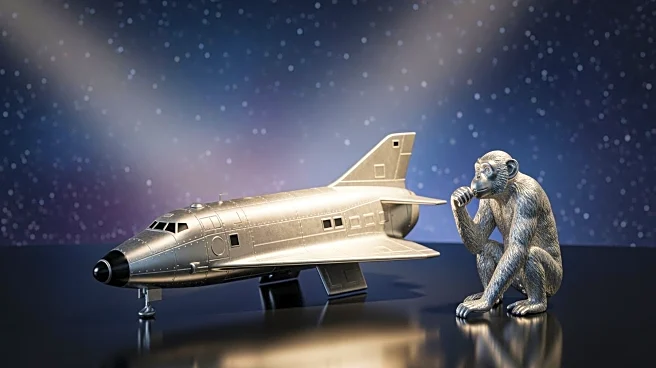
The historical significance of sending animals to space is being revisited, focusing on the story of Ham, a chimpanzee who became the first great ape in space. Launched on January 31, 1961, Ham's mission was a precursor to human spaceflight, paving the way
for Alan Shepard's historic journey. Ham was trained to perform tasks during his flight, which provided valuable data on the effects of space travel on living organisms. Despite technical issues that altered the flight path, Ham's mission was deemed a success, demonstrating the feasibility of manned space missions.
Why It's Important?
Ham's mission was a critical step in the U.S. space program, providing insights that were essential for the success of subsequent human spaceflights. The use of animals in space exploration has ethical implications but also underscores the importance of ensuring safety and viability before sending humans. This historical reflection highlights the role of animals in advancing scientific knowledge and the development of space technology. The success of such missions has had lasting impacts on space exploration, influencing policies and practices in the field.