
What's Happening?
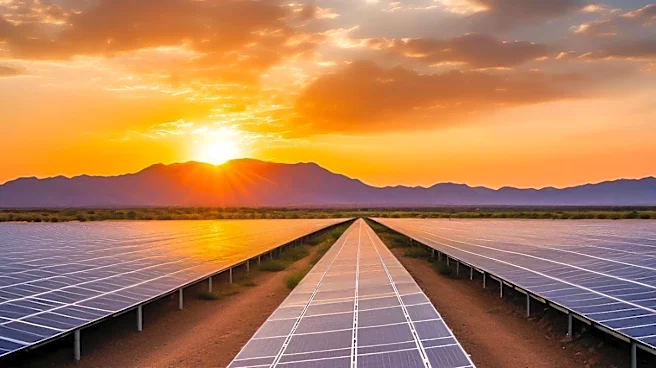
California and Texas are at the forefront of the U.S. solar power expansion, with California slightly leading with 55,510 megawatts of installed solar capacity compared to Texas's 53,568 megawatts. This
development is part of a broader national shift towards solar energy, with nine states, including Florida, Arizona, and Nevada, playing significant roles. These states are adopting various strategies to increase solar capacity, such as utility-scale projects and agrivoltaics. The growth in solar power is driven by the benefits of lower costs, reduced pollution, and increased energy resilience. EnergySage provides tools to help consumers access solar incentives and save on installations.
Why It's Important?
The expansion of solar power in the U.S. is crucial for reducing reliance on fossil fuels, lowering energy costs, and enhancing energy security. As more states adopt solar energy, the potential for cleaner and more affordable power increases, benefiting both consumers and the environment. The integration of solar with battery storage further enhances energy resilience, especially in areas prone to extreme weather. This shift also supports economic growth by creating jobs in the renewable energy sector and reducing the environmental impact of energy production.
What's Next?
As solar power continues to spread across the U.S., states are likely to implement more innovative projects and policies to support this growth. The focus will be on integrating solar with storage solutions and expanding access to solar energy for communities. This could involve new incentives, regulatory changes, and investments in infrastructure to support the increasing demand for renewable energy. The ongoing competition between states like California and Texas may also drive further advancements in solar technology and deployment strategies.