





What's Happening?
The Maryland Congressional Delegation, including U.S. Representatives Johnny Olszewski, Sarah Elfreth, and April McClain Delaney, and U.S. Senators Chris Van Hollen and Angela Alsobrooks (all D-Md.), announced over $33.9 million in federal funding for
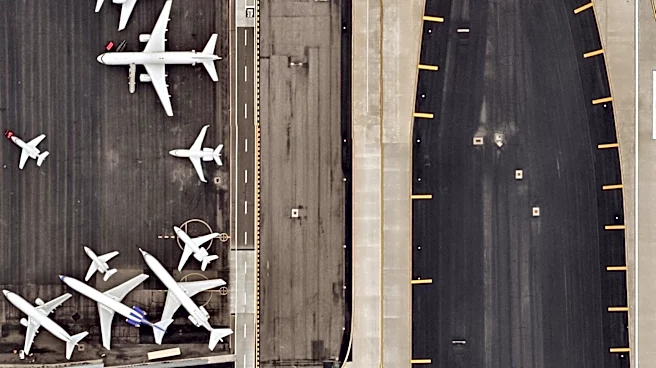
infrastructure and equipment upgrades at three Maryland airports. The funding, totaling $33,931,039, will be allocated to Baltimore/Washington International Thurgood Marshall Airport (BWI), Carroll County Regional Airport, and Hagerstown Regional Airport. These investments are designated for crucial safety improvements across all three facilities. Specifically, BWI will receive funds for an evaluation of noise exposure and its impact on surrounding communities, as well as the reconstruction of 110,000 square yards of the North Cargo Apron pavement and the installation of low-emission equipment, including five gate electrification systems and remote ground power units. Carroll County Regional Airport will use its allocation to shift Runway 16/34 by 250 feet to meet current standards. Hagerstown Regional Airport will remove an obstructive building and relocate fencing, in addition to rehabilitating lighting and 3,000 feet of pavement on Runway 2/20 to maintain structural integrity and minimize foreign object debris. This funding is provided through the FAA’s Airport Improvement Program (AIP), which Senator Van Hollen helped fund through the passage of the FAA Reauthorization Act of 2024, authorizing $4 billion annually for Fiscal Years 2025 through 2028.
Why It's Important?
This significant federal investment in Maryland's airport infrastructure is crucial for enhancing safety, efficiency, and economic growth within the state and the broader region. Airports serve as vital economic engines, facilitating travel, trade, and business connections. The upgrades at BWI, Carroll County Regional, and Hagerstown Regional airports will ensure these facilities meet modern safety standards, which is paramount for passenger and cargo operations. The evaluation of noise exposure at BWI is particularly important for addressing community concerns and improving the quality of life for residents living near the airport. Furthermore, the installation of low-emission equipment at BWI aligns with broader environmental sustainability goals, potentially reducing the carbon footprint of airport operations. By modernizing infrastructure, these airports can better support the growing demands of air travel and commerce, contributing to regional economic stability and job creation. The funding also underscores the importance of federal programs like the FAA's Airport Improvement Program in maintaining and upgrading critical national infrastructure, ensuring the U.S. aviation system remains robust and competitive.
What's Next?
The announced federal funding will now proceed to the implementation phase, with each airport initiating its respective upgrade projects. BWI will begin the evaluation of noise exposure and the reconstruction of its North Cargo Apron, alongside the installation of new low-emission equipment. Carroll County Regional Airport will undertake the runway shift to align with current standards, while Hagerstown Regional Airport will focus on removing obstructions and rehabilitating its runway and lighting. These projects are expected to unfold over the coming fiscal years, supported by the authorized funding from the FAA Reauthorization Act of 2024. The successful completion of these upgrades will lead to improved operational safety, enhanced efficiency, and potentially reduced environmental impact at these Maryland airports. Local communities can anticipate the noise exposure evaluation at BWI to provide data and potential mitigation strategies for noise concerns. The ongoing federal commitment to the Airport Improvement Program suggests continued support for similar infrastructure projects nationwide, ensuring the long-term viability and modernization of the U.S. aviation network.
Beyond the Headlines
The federal investment in Maryland's airports extends beyond immediate infrastructure improvements, touching upon broader themes of regional development, environmental responsibility, and the evolving role of aviation in a modern economy. The focus on noise exposure at BWI highlights the increasing importance of balancing economic development with community well-being and environmental considerations. This reflects a growing trend in urban planning and infrastructure projects to incorporate social and environmental impact assessments more thoroughly. The adoption of low-emission equipment at BWI also signals a commitment to sustainable aviation practices, which could serve as a model for other airports nationwide as the industry seeks to reduce its carbon footprint. Furthermore, the continued federal funding through programs like the AIP underscores the strategic importance of maintaining a robust and modern aviation infrastructure for national security, economic competitiveness, and disaster response. This investment is not just about concrete and equipment; it's about ensuring the U.S. remains a leader in global connectivity and innovation, while also addressing the localized impacts of such critical infrastructure on its citizens.