





What's Happening?
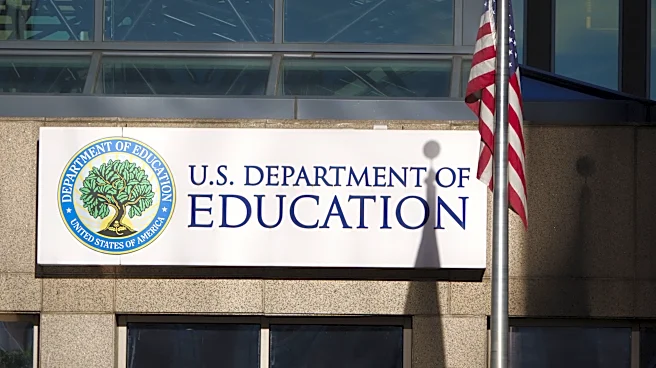
The U.S. Department of Education has announced a new rule under the Student Tuition and Transparency System (STATS) and Earnings Accountability, which may restrict access to federal student loans for certain college programs. This policy targets programs whose
graduates consistently earn below a federal benchmark. Undergraduate programs will be evaluated against the median earnings of working adults with a high school diploma, while graduate programs will be compared to those holding a bachelor's degree. If a program fails to demonstrate a financial return on investment for its graduates in two out of three consecutive award years, it will lose eligibility for the federal Direct Loan program. Persistent failure over three years could lead to the termination of eligibility for Title IV of the Higher Education Act (HEA), including Pell Grant eligibility, for all of an institution’s low-earning outcome programs. The majority of this rule is set to take full effect on July 1, 2027, including the new earnings accountability requirements.
Why It's Important?
This new accountability framework is a significant policy shift aimed at safeguarding American taxpayer dollars and protecting students from accumulating unmanageable debt for programs that do not offer a reasonable return on investment. Under Secretary of Education Nicholas Kent stated that this policy addresses rising rates of default and delinquency within the $1.7 trillion federal student loan portfolio. For students, particularly those in programs that might struggle to meet the earnings benchmarks, this could mean a significant reduction in access to federal financial aid, potentially forcing them to seek more expensive private loans or reconsider their educational paths. University departments, such as social work and communication design, are expressing concerns about how these changes will impact their students' ability to afford higher education, emphasizing the need for institutions to better prepare graduates for well-paying jobs.
What's Next?
As the new rule's full implementation approaches on July 1, 2027, colleges and universities across the U.S. will need to assess their programs' graduate earning outcomes. Institutions may need to adjust curricula, enhance career services, or even discontinue programs that consistently fail to meet the federal earnings benchmarks to ensure their students retain access to federal financial aid. Students currently enrolled in or considering programs that might be affected could face uncertainty regarding future loan availability, potentially prompting them to explore alternative funding sources or different fields of study. The Department of Education will likely monitor the impact of these changes on student enrollment, loan default rates, and graduate employment outcomes, which could lead to further adjustments or refinements of the policy in the future.
Beyond the Headlines
This policy reflects a broader national conversation about the value of higher education and the accountability of educational institutions. It raises questions about the role of federal funding in supporting diverse academic fields, some of which may not lead to high immediate earnings but contribute significantly to society. The rule could inadvertently steer students away from vital but lower-paying professions, potentially exacerbating shortages in fields like social work or certain arts and humanities disciplines. Furthermore, it highlights the tension between ensuring financial viability for students and preserving the breadth of academic offerings. The long-term implications could include a shift in university priorities towards more vocationally oriented programs, potentially altering the landscape of higher education in the U.S. and influencing career choices for future generations.