


What's Happening?
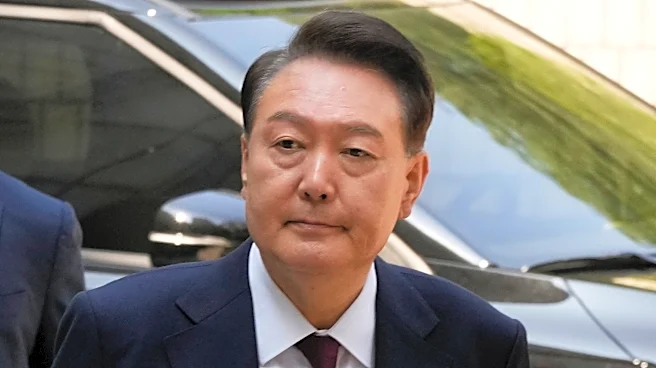
Former President Yoon Suk-yeol has had his lawyer status revoked by the Korean Bar Association following a Supreme Court ruling. Yoon was sentenced to seven years in prison for obstructing the arrest of high-ranking government officials. The revocation
follows the Lawyers Act, which mandates that a lawyer's registration be canceled if they receive a sentence of imprisonment or higher and the execution has not been completed for five years. Yoon's legal troubles are compounded by other ongoing trials, including charges of leading a rebellion and general transfer, which could result in life imprisonment and a 30-year sentence, respectively. Despite the possibility of regaining his lawyer status five years after serving his sentence, the likelihood is slim due to these additional charges.
Why It's Important?
The revocation of Yoon's lawyer status marks a significant development in South Korea's legal and political landscape. It underscores the legal system's stance on accountability, even for former high-ranking officials. This decision may influence public perception of the judiciary's independence and its role in maintaining the rule of law. The case also highlights the broader implications of political and legal accountability in South Korea, potentially affecting public trust in government institutions. Yoon's situation serves as a cautionary tale for current and future leaders regarding the consequences of legal transgressions.
What's Next?
Yoon faces a challenging legal future with multiple trials still pending. The outcomes of these trials could further complicate his legal standing and potential for release. The legal community and public will be closely watching these proceedings, which may set precedents for handling similar cases involving high-profile figures. Additionally, the political ramifications of Yoon's legal battles could influence future policy discussions on legal reforms and the treatment of former officials.