




What's Happening?
Residents on Shepard Street in the town of Watertown, New York, are experiencing ongoing issues with low water pressure and a complete lack of hot water. Megan McCormick, a resident, described her shower as a 'gentle rain shower' due to the minimal water flow.
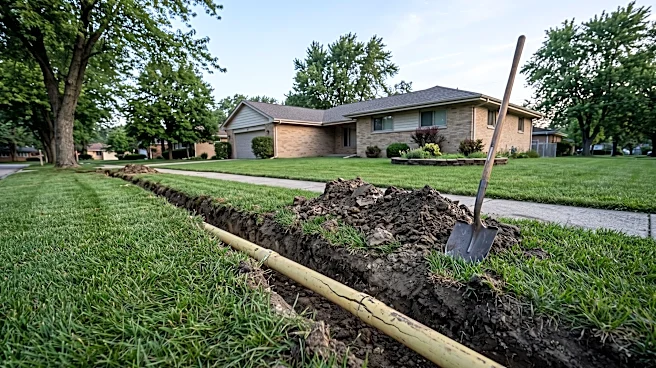
Another resident, Veranne Johnson, reported having 'absolutely no hot water,' making it impossible to shower or bathe in her own home. The problem stems from an 80-year-old private water line, which residents own. The situation worsened a few years ago when a snow plow reportedly hit and bent the pipe, leading to a constant leak. This aging infrastructure has resulted in significant inconvenience and financial burden for the affected residents, who continue to receive water bills, some as high as $250 a month, despite the severely limited service. The town had plans to establish a new public water district to address such issues, but this project is currently on hold due to financial considerations.
Why It's Important?
This situation highlights critical infrastructure challenges faced by local communities across the U.S., particularly in areas with older, privately maintained systems. The reliance on an 80-year-old private water line underscores the potential for widespread service disruptions and significant costs when infrastructure is not regularly updated or maintained. For the residents of Shepard Street, the lack of basic amenities like reliable water pressure and hot water impacts daily life, health, and hygiene, forcing them to seek alternatives for essential tasks like showering and washing dishes. The town's decision to halt the public water district project due to financial constraints reveals a broader issue of funding limitations for essential public services. This can lead to a decline in living standards and potential public health concerns, as residents are left to cope with inadequate utilities. The financial burden on individual homeowners to repair a shared, aging private line also points to a need for clearer policies or support mechanisms for such infrastructure in older neighborhoods.
What's Next?
Residents on Shepard Street will continue to face the challenges of low water pressure and no hot water as the town's public water district project remains on hold. The Supervisor, James Wright, indicated that the town cannot promise something it cannot deliver, suggesting that a resolution from the municipality is not imminent. This leaves residents like Megan McCormick and Veranne Johnson to either continue enduring the current conditions, seek temporary solutions such as showering elsewhere or using bottled water, or bear the significant cost of repairing the private water line themselves. The ongoing water bills, despite the inadequate service, will likely remain a point of contention. Future developments will depend on the town's financial situation and whether a viable plan can be established to address the aging infrastructure, either through the revival of the public water district project or alternative community-supported initiatives. Residents are seeking assistance, indicating a potential for collective action or appeals to local authorities for support.
Beyond the Headlines
The predicament in Watertown extends beyond a simple utility issue, touching upon themes of community responsibility, economic disparity, and the long-term implications of deferred infrastructure maintenance. The fact that residents are responsible for an 80-year-old private water line raises questions about the equity of infrastructure ownership and maintenance, especially in areas where residents may not have the financial means for costly repairs. This situation could exacerbate existing social inequalities, as those with fewer resources are disproportionately affected by failing infrastructure. Furthermore, the town's financial struggles in funding a public water district reflect a national challenge where many municipalities grapple with aging systems and insufficient budgets for upgrades. This can lead to a cycle of neglect, where problems escalate until they become critical, impacting public health and quality of life. The incident also highlights the importance of proactive urban planning and investment in essential services to prevent such crises and ensure equitable access to modern amenities for all citizens.