
What's Happening?
President Trump has issued an executive order aimed at restricting mail-in voting by requiring federal agencies to compile a list of confirmed U.S. citizens and share it with states before federal elections.
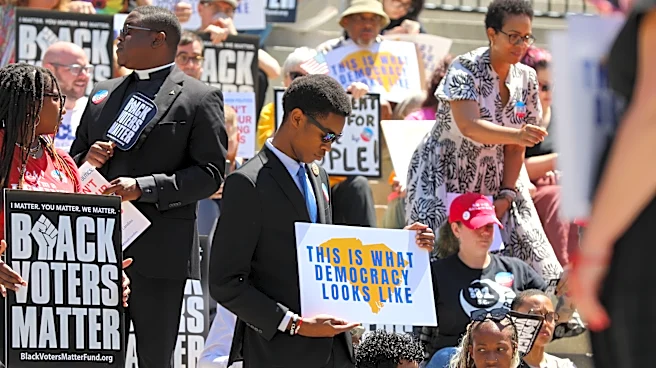
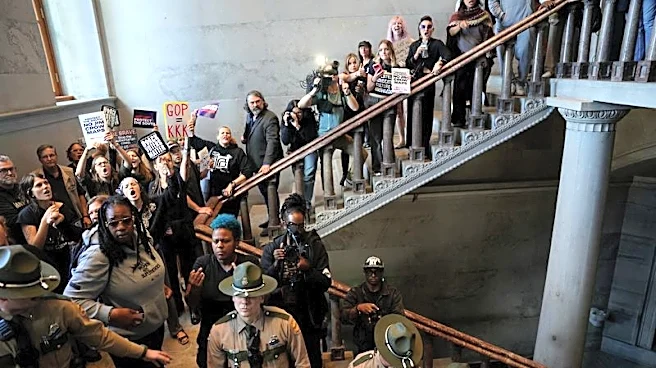
This order has sparked legal challenges from Democrats and civil rights groups, who argue that the President has overstepped his authority. U.S. District Judge Carl Nichols is currently hearing the case but has not yet made a ruling. The plaintiffs contend that the order is unconstitutional, as it infringes on the powers of states and Congress to regulate elections. They also argue that the order could create confusion and chaos for local election officials, potentially limiting voter registration and ballot access.
Why It's Important?
The executive order has significant implications for the U.S. electoral process, particularly concerning mail-in voting, which has been a contentious issue. Critics argue that the order could disproportionately affect Democratic voters, who are more likely to vote by mail. The legal challenge highlights ongoing debates about federal versus state control over election processes. If upheld, the order could set a precedent for increased federal involvement in elections, potentially altering the balance of power between state and federal authorities. The outcome of this case could impact voter access and the administration of upcoming elections, influencing the political landscape.
What's Next?
The legal proceedings will continue as Judge Nichols considers the arguments from both sides. The administration is seeking to dismiss the plaintiffs' claims, arguing that the litigation is premature. The case's outcome could lead to further legal battles, especially if the order is implemented. Stakeholders, including state election officials and civil rights groups, are likely to respond based on the court's decision. The case may also prompt legislative actions or additional executive orders related to election processes.